AI Startup Accounting: Problems and Solutions
Common Accounting Problems in AI Startups
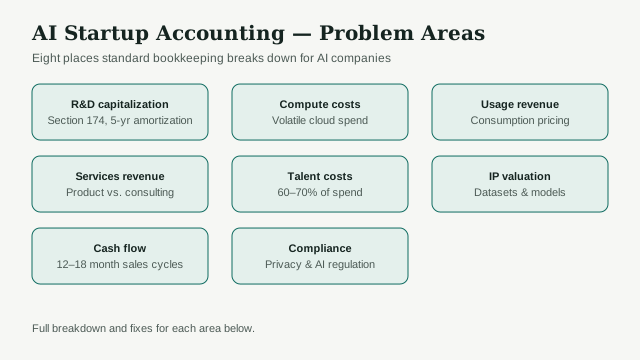
AI startups face accounting problems that other businesses rarely encounter. Your expenses don't follow normal patterns, your revenue can be hard to predict, and standard accounting practices often don't fit your business model. Most founders start with basic bookkeeping but quickly run into issues they can't solve with standard approaches. Here are the most common problems and how to fix them.Problem 1: Tracking R&D Expenses Correctly
The Problem:
AI companies typically allocate the majority of their funds to research and development before generating revenue. Many founders treat all development costs uniformly, but the IRS has specific rules regarding R&D expenses that changed in 2022.The Solution:
Separate your R&D costs into clear categories. Track employee salaries working on development, cloud computing costs for model training, and data acquisition expenses separately from regular business operations. From 2022 through 2024, Section 174 required you to capitalize R&D expenses and spread them over five years (or 15 years for foreign research) instead of deducting them immediately. That changed: for tax years beginning after December 31, 2024, new Section 174A restores the option to deduct domestic R&D costs immediately, while foreign R&D still amortizes over 15 years. Set up separate accounting codes for R&D activities so you can easily identify these costs for tax purposes. Keep detailed records of what each expense relates to. This helps with R&D tax credits and makes audits much easier.Problem 2: Managing Unpredictable Computing Costs
The Problem:
Cloud computing bills can spike without warning when you train new models or run large experiments. Many AI startups get surprise bills that are 3-5 times their normal monthly costs.The Solution:
Set up cost monitoring alerts in your cloud provider accounts. Configure alerts at 50%, 75%, and 90% of your monthly budget so you know when costs are climbing. Create a separate budget category for computing expenses and add a 30% buffer for unexpected spikes. Track costs by project or experiment so you know which activities drive the biggest bills. Use reserved instances or committed use discounts for predictable workloads. This can cut your regular computing costs by 20-40%.Problem 3: Revenue Recognition for AI Products
The Problem:
AI products often use consumption-based pricing where customers pay per API call or prediction. This creates uneven revenue that's hard to track and predict. Traditional subscription accounting methods don't work well.The Solution:
Set up systems to track usage accurately in real time. You need to know exactly how much each customer uses your service and when they use it. For consumption-based revenue, recognize income as customers use your service, not when they pay upfront credits. If customers buy API credits in advance, record this as deferred revenue until they use the credits. Create monthly reports showing usage patterns by customers. This helps you predict future revenue and identify customers who might need different pricing plans.Problem 4: Handling Professional Services Revenue
The Problem:
Many AI startups mix product sales with consulting services. These different revenue streams follow different accounting rules, which creates confusion in financial reporting.The Solution:
Keep product revenue completely separate from service revenue in your accounting system. Use different charts of accounts codes and track them on separate financial statements if needed. For consulting work, recognize revenue as you complete the work, not when you sign the contract. For products, follow the recognition rules based on your specific product delivery model. Create separate profit and loss statements for each revenue stream. This helps you understand which parts of your business are most profitable.Problem 5: Expensive AI Talent Costs
The Problem:
AI engineers and data scientists cost significantly more than typical software developers. Salaries often exceed $200,000-300,000, and stock option accounting adds complexity to your financial statements.The Solution:
Budget 60-70% of your total expenses for personnel costs. This is higher than most tech companies but necessary for AI talent. For stock options, calculate the fair value when you grant them and spread this cost over the vesting period. Use professional valuation services for accuracy, especially before funding rounds. Track contractor expenses separately from employee costs. Many AI companies use contractors for data labeling and model evaluation, but you need to classify them correctly to avoid tax problems.Problem 6: Valuing Intellectual Property
The Problem:
Your team creates valuable algorithms and datasets, but accounting rules make it hard to show this value on your financial statements. Most development costs must be expensed immediately, even though they create lasting assets.The Solution:
Track all development costs by project so you can see how much you've invested in each product or capability. Even if you can't capitalize these costs, this information is valuable for internal decision-making and investor presentations. For purchased datasets or licensed models, treat these as intangible assets and amortize them over their useful life. Be conservative about useful life estimates since AI technology changes quickly. Keep detailed records of patent applications and other IP protection costs. These can often be capitalized as assets.Problem 7: Cash Flow Management
The Problem:
AI startups often have long periods with high expenses but no revenue. Sales cycles for AI products can take 12-18 months, making cash flow planning difficult.The Solution:
Create detailed monthly cash flow projections that go out 18-24 months. Include realistic timelines for customer acquisition and revenue recognition. Plan funding rounds around development milestones, not just when you're running low on cash. Investors want to see technical progress, so time your fundraising around product launches or breakthroughs. Keep 6-12 months of expenses in reserve for unexpected delays in revenue or funding. AI development timelines are notoriously unpredictable.Problem 8: Regulatory Compliance Costs
The Problem:
New AI regulations are creating compliance requirements that many startups aren't prepared for. Privacy laws like GDPR also affect how you handle training data.The Solution:
Budget for compliance costs, including legal reviews, security audits, and potential algorithm testing requirements. These costs will only increase as regulations develop. Work with lawyers who understand AI regulations in your target markets. Compliance requirements vary significantly by industry and geography. Set aside funds for data privacy compliance, including secure data storage, deletion procedures, and consent management systems.Setting Up Your Accounting Systems
Choose the Right Software
Use accounting software that can handle project-based cost tracking and multiple revenue recognition methods, and keep your expense categorization aligned with the IRS rules for deducting business expenses. QuickBooks works for early stages, but you'll likely need more sophisticated systems as you grow.Create a Proper Chart of Accounts
Set up separate account codes for R&D expenses, computing costs, data acquisition, and different revenue streams. This makes reporting and tax preparation much easier.Implement Monthly Reporting
Create monthly financial reports that show cash burn rate, customer acquisition costs, and unit economics. These metrics matter more than traditional profit and loss for AI startups.Working with Professional Help
Find AI-Experienced Accountants
Work with accountants who understand AI business models. Generic small business accountants often don't know how to handle R&D capitalization or usage-based revenue recognition.Get Legal Support
Use lawyers experienced with AI companies for equity compensation, IP protection, and regulatory compliance. The costs of getting these wrong far exceed professional fees.Consider Fractional CFOs
Many AI startups benefit from fractional CFO services that provide high-level financial expertise without full-time costs. Look for professionals with AI or deep tech experience.Get Expert Help with Your AI Startup Accounting
[Schedule Your Free Consultation]
At LedgersCFO, we solve accounting problems for AI startups every day. We understand R&D expense rules, usage-based revenue recognition, and the cash flow challenges AI companies face. Our team sets up proper accounting systems, handles compliance requirements, and creates clear financial reports that investors understand. Let us handle your accounting challenges so you can focus on building great AI products.FAQs
How do I handle R&D expenses under the new tax rules?
You must capitalize R&D expenses and amortize them over five years starting in 2022. Track these costs separately and work with tax professionals familiar with the new rules.
What's the best way to track usage-based revenue?
Set up real-time usage tracking systems and recognize revenue as customers consume your services. Keep detailed records of usage patterns for each customer.
How should I budget for unpredictable computing costs?
Add a 30% buffer to your computing budget and set up cost alerts. Use reserved instances for predictable workloads to reduce variable costs.
When should I capitalize vs. expense AI development costs?
Most early development must be expensed immediately. You can only capitalize costs after proving technological feasibility, which is a high bar for software development.
How can LedgersCFO help with my AI startup accounting?
We provide specialized accounting services for AI companies, including R&D expense tracking, revenue recognition setup, cash flow planning, and investor reporting.