CA or CPA: Which Does Your Business Need?
Ever thought CA and CPA sound the same? Many business owners feel that way. The two credentials cover different countries. The real question is not which title looks stronger. It's which professional fits your business at this stage of growth. This guide explains the difference, when each credential matters, and how to choose the right support.
Understanding What a CA Means for Your Business
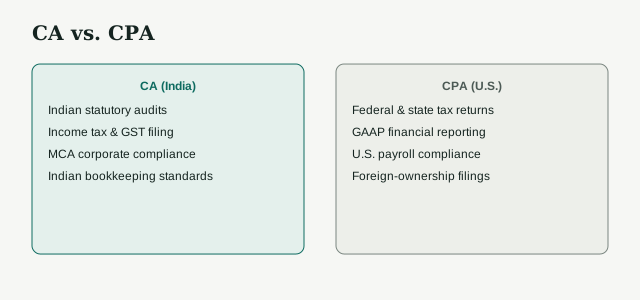
A Chartered Accountant is trained under a national accounting body and specializes in Indian tax rules, company law, and statutory audits. Their work focuses on the compliance and reporting needs of businesses that operate under Indian regulations.
Where a CA Is Most Useful
A CA typically helps with:
-
Indian statutory audits
-
Income tax filing and GST compliance
-
Corporate secretarial requirements
-
Local bookkeeping oversight
-
Advisory related to Indian accounting standards
For companies registered in India or mainly handling Indian operations, a CA is the natural first point of contact.
Understanding What a CPA Means for Your Business
A Certified Public Accountant holds a US license and is trained in US federal tax, state tax, payroll rules, and GAAP reporting. Their work focuses on US-specific compliance.
Where a CPA Is Most Useful
A CPA generally provides:
-
US tax return preparation such as Form 1120
-
GAAP-based financial statements
-
Payroll setup and compliance for US employees
-
State tax registrations and filings
-
Advisory for businesses that earn or move money through US channels
Businesses with US entities or US investors require this expertise to avoid filing mistakes and penalties.
Key Differences That Matter for Business Owners
Although both roles handle accounting and tax work, their focus areas differ based on jurisdiction.
Core Practical Differences
-
A CA focuses on Indian law and compliance.
-
A CPA focuses on US tax and reporting standards.
-
A CA is best for companies managing Indian filings.
-
A CPA is essential for US entities, US payroll, and GAAP reporting.
Your business should choose based on where compliance is required.
When Your Business Should Choose a CA
If your operations, filings, and record-keeping are rooted in India, then a CA provides the right expertise.
Ideal Situations for a CA
-
Indian statutory audits
-
GST and TDS management
-
Income tax preparation for Indian entities
-
Bookkeeping aligned with Indian standards
-
Corporate compliance and MCA filings
A CA ensures your business meets local regulations without risk of penalties.
When Your Business Should Choose a CPA
If your company has any level of US activity, a CPA becomes essential.
Ideal Situations for a CPA
-
Operating a US LLC or corporation
-
Filing federal and state tax returns
-
Managing US payroll for employees or contractors
-
Preparing GAAP financials for investors
-
Reporting foreign ownership to the IRS on Form 5472, which carries a $25,000 penalty per form, per year if missed
A CPA ensures your filings stay accurate and predictable in the US.
What a Cross-Border Business Should Do
Many companies operate in both India and the US. These businesses benefit from coordinated CA and CPA support so that all filings match across jurisdictions.
How to Manage Cross-Border Compliance Smoothly
-
Start with reconciled books
-
Align Indian and US reporting templates
-
Set a single data room for shared documentation
-
Use clear communication between advisors
-
Identify filing requirements for each country separately
This eliminates mismatches and reduces compliance risk.
How to Evaluate a CA or CPA for Your Business
Choosing the right advisor goes beyond the qualification. Experience with your industry and clear communication matter more than anything else.
Questions to Ask Before Hiring
-
Have they worked with businesses similar to yours
-
Can they explain complex topics in simple language
-
Do they provide structured monthly or quarterly reporting
-
Are they familiar with cross-border accounting if needed
-
How do they handle documentation and data security
Pick someone who provides clarity, not more confusion.
Services You Should Expect From Each Professional
Both credentials offer value, but their services differ based on jurisdiction.
What a CA Typically Delivers
-
Statutory audit support
-
GST and income tax filing
-
Indian bookkeeping and month-end controls
-
Corporate compliance under MCA
What a CPA Typically Delivers
-
US tax returns such as Form 1120 or 1040-NR
-
GAAP-compliant financial reporting
-
Payroll compliance under US rules
-
Foreign-owned entity filings such as Form 5472
When to Bring in a Specialist
Some situations require advanced knowledge beyond standard CA or CPA work.
Specialty Areas That Need Expert Guidance
-
Transfer pricing policies
-
Treaty benefits and withholding tax planning
-
Structuring foreign investments
-
Multinational reporting
-
Responding to foreign tax notices
Founders save time and money by addressing these early rather than correcting mistakes later.
How LedgersCFO Supports Businesses Across India and the US
At LedgersCFO we help founders identify whether their business needs a CA, a CPA, or a coordinated mix of both. We review their filing exposure, investor expectations, payroll needs, and entity structure. This approach creates clarity and allows businesses to grow without compliance roadblocks.
Checklist to Decide Which Advisor You Need Right Now
-
Do you file taxes in India, the US, or both
-
Do you have employees in either country
-
Do investors require GAAP financials
-
Does your business move money internationally
-
Does your ownership structure trigger foreign reporting
If you relate to more than one of these, you likely need combined CA and CPA support.
Book a Free Consultation Now
Book a free consultation now and let us walk through your business structure, your filing responsibilities, and the type of support you need. At LedgersCFO we help you choose the right expertise, plan your compliance calendar, and keep both Indian and US filings accurate and stress-free.
FAQs
Can my business work with both a CA and a CPA
Yes. Many cross-border companies use both to meet requirements in India and the US.
How do I know if a CPA is required
You need a CPA when your business files US taxes, runs US payroll, or faces US investor requirements.
Does every Indian business expanding to the US need a CPA
If you register a US entity or earn US-sourced income, you will need CPA support.
Can a CA handle US accounting
A CA manages Indian compliance. US tax and GAAP reporting should be handled by a CPA.
How can LedgersCFO help
We map your needs and guide you on whether a CA, CPA, or combined cross-border expertise is the right approach.