Form 1040 Explained: Complete Guide
If you’ve ever filed a tax return in the United States, you’ve likely come across Form 1040. It’s the most common form individuals use to report their income, claim deductions, and calculate the amount of tax they owe or the refund they’re due.
Think of it as your yearly financial report card it tells the government how much you earned and ensures you’ve paid your fair share of taxes. Whether you’re a salaried employee, freelancer, or small business owner, Form 1040 plays a crucial role in staying compliant with US tax laws.
Who Needs to File Form 1040?
Almost every US citizen or resident earning income must file Form 1040. You are required to submit this form if:
-
You earned income from employment, self-employment, or investments.
-
Your income exceeds the IRS minimum filing threshold.
-
You wish to claim a tax refund for excess withholding.
-
You owe special taxes such as self-employment tax or alternative minimum tax.
Even if your income is below the filing limit, it can still be beneficial to file this form. Doing so allows you to claim refundable credits such as the Earned Income Tax Credit or Child Tax Credit.
Different Versions of Form 1040
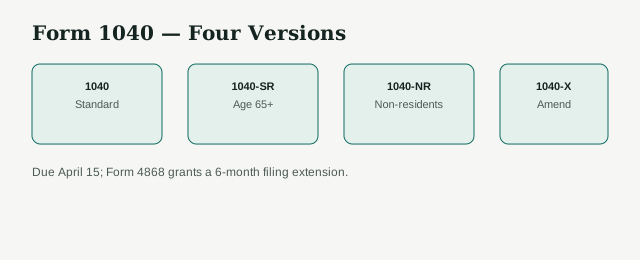
Not everyone files the same version of this form. The IRS provides a few types to suit different taxpayers:
Form 1040 (Standard)
Used by the majority of individuals and families. It covers all standard income and deduction options.
Form 1040-SR
Designed for seniors aged 65 and older. It’s easier to read and focuses on income sources common to retirees.
Form 1040-NR
This is meant for non-resident aliens earning income in the US.
Form 1040-X
Used when you need to correct or update a previously filed return.
Knowing which version applies to you helps prevent delays or errors when submitting your taxes.
Breaking Down the Sections of Form 1040
1. Personal Information
You’ll start with basic details which includes name, address, filing status, and Social Security number.
2. Income Section
This is where you report all types of income you earned during the year, whether it’s from a job, a side business, or investments.
3. Adjustments and Deductions
Here, you can claim deductions for expenses like student loan interest, IRA contributions, or health savings accounts. These deductions reduce your taxable income.
4. Credits and Payments
This section includes refundable and non-refundable credits that lower your overall tax liability for example, education credits or child tax credits.
5. Refund or Amount Owed
After the calculations, you’ll know whether you owe more tax or are eligible for a refund.
Common Filing Mistakes to Avoid
Even a small mistake on can slow down your refund or lead to an IRS notice. Here are a few errors people commonly make:
-
Entering incorrect Social Security numbers
-
Forgetting to sign or date the return
-
Reporting the wrong filing status
-
Missing out on eligible deductions or credits
-
Filing after the deadline without requesting an extension
Take a few extra minutes to review every section before submitting. Accuracy can save you time and money later.
When and How to File Form 1040
The IRS sets April 15 as the standard deadline each year for filing individual tax returns. If you can’t make it, you can request a six-month extension by submitting Form 4868. Remember, though, an extension to file doesn’t mean an extension to pay.
You can file your Form 1040 in two main ways:
-
E-File (Recommended): Fast, secure, and more accurate. You’ll also receive confirmation when the IRS accepts your return.
-
Paper Filing: Traditional but slower. You’ll mail your completed form to the IRS service center for your state.
Documents You’ll Need Before Filing
Preparing your Form 1040 becomes much easier when you have all the necessary documents ready. Gather:
-
W-2 forms from your employer
-
1099 forms for freelance or interest income
-
Proof of deductible expenses (education, healthcare, donations, etc.)
-
Records of tax payments made during the year
Having everything organized in advance makes the filing process quicker and helps prevent missed entries.
Why Many People Choose Professional Help
Filing your own tax return is possible, but if your income sources are varied or you run a business, professional help can make things smoother.
A qualified tax consultant can:
-
Identify deductions you might overlook
-
Ensure all IRS requirements are met
-
Minimize your tax burden legally
-
Help you plan better for the next tax year
Working with an expert is especially valuable for freelancers, entrepreneurs, and those earning across states or countries.
Need Help Filing Your Form 1040?
Book a Free Consultation Today
At LedgersCFO, we make U.S. tax filing easy and stress-free. Our team prepares your Form 1040, reviews your income and deductions, and ensures everything is filed correctly and on time.
We work with NRIs, Indian founders, and professionals who earn in the U.S. Whether you’re filing for the first time or need help managing multiple income sources, we’ll guide you through the process step by step.
Avoid errors, delays, and penalties. Let our experts handle your Form 1040 so you can stay compliant and keep more of what you earn.
FAQs
What is the deadline for filing Form 1040?
The usual deadline is April 15 each year. You can request an extension by filing Form 4868.
Can I file Form 1040 online?
Yes. Electronic filing (E-file) is the most efficient and secure method to submit your return.
What if I make a mistake after submitting Form 1040?
You can file an amended return using Form 1040-X to correct errors or add missing information.
Do I need to file Form 1040 if I have no income?
Not necessarily, but filing may be beneficial if you are eligible for refundable tax credits.
What happens if I miss the deadline?
You may face penalties and interest on unpaid taxes. It’s best to file as soon as possible, even if you can’t pay immediately.