Form 8832: A Guide to Tax Classification
If you’ve ever started a business in the U.S. or expanded your company there, you’ve probably come across Form 8832. At first glance, it looks like just another IRS document but it plays a major role in how your business is taxed.
In plain words, Form 8832 allows a business to choose how it wants to be treated for tax purposes. This flexibility can help you save money, simplify filing, and even plan your finances better.
Let’s break it down step by step so you’ll know exactly what Form 8832 does, who needs it, and how to use it the right way.
What Is Form 8832?
Form 8832, officially known as the Entity Classification Election, is issued by the Internal Revenue Service (IRS). It gives certain business entities the power to choose their tax classification in other words, how they want the IRS to treat their income.
For example:
-
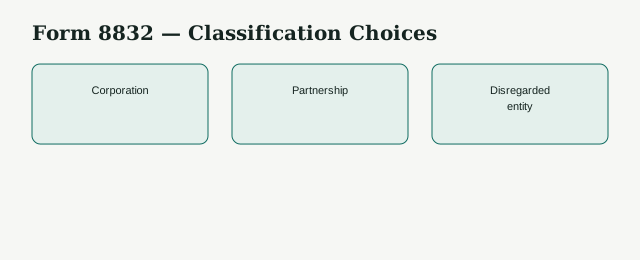
A Limited Liability Company (LLC) can choose to be taxed as a corporation, partnership, or even a disregarded entity (similar to a sole proprietorship).
-
Foreign entities can also use Form 8832 to decide how they are recognized under U.S. tax law.
This flexibility is what makes the form so valuable — it helps business owners align their tax status with their financial goals.
Why Is Form 8832 Important?
The way your business is taxed has a huge impact on your profits and compliance requirements. Filing this Form gives you control over that.
Here’s why it matters:
-
Tax Savings: Some entities benefit from corporate tax rates, while others save more by being treated as pass-through entities.
-
Avoiding Double Taxation: Certain elections can prevent the same income from being taxed twice.
-
Flexibility: Businesses that expand, merge, or change structure can adjust their classification to fit new goals.
In short, Form 8832 gives your business a say in how much tax you pay and how your income is reported.
Who Should File Form 8832?
Not every business needs this form. It’s mainly for:
-
LLCs that want to change how they’re taxed.
-
Foreign entities that wish to define their U.S. tax identity.
-
Existing entities that want to change from one tax classification to another (for example, from a partnership to a corporation).
If your company’s tax treatment doesn’t match your financial strategy, this form can help you fix that.
Example: How It Works in Real Life
Let’s say Ramesh starts a consulting firm in the U.S. as an LLC. By default, the IRS treats single-member LLCs as “disregarded entities,” meaning Ramesh reports all profits on his personal tax return.
A year later, the firm grows, and he wants to reinvest profits into the company without paying personal income tax on every dollar. In that case, he can file Form 8832 to have his LLC taxed as a C corporation.
This decision allows the company to retain earnings and pay taxes at the corporate level a better fit for his long-term goals.
That’s how Form 8832 works it gives you options based on what’s best for your situation.
When Should You File Form 8832?
Timing matters a lot. You can file the form:
-
Within 75 days before or after the date you want the election to take effect.
-
For new entities, it’s best to file as soon as you set up your business if you don’t want the default classification.
If you miss the window, your election may apply later than expected, which can affect your tax filings and payments.
How to File Form 8832
The filing process isn’t complicated, but it must be done carefully. Here’s a quick step-by-step overview:
-
Download Form 8832 from the IRS website.
-
Fill out basic details name, address, and Employer Identification Number (EIN).
-
Choose your entity type and the tax classification you want.
-
Sign and date the form (owners or authorized members must sign).
-
Mail the completed form to the correct IRS address mentioned in the instructions.
There’s no electronic filing option for this form yet, so it must be sent by mail.
Common Mistakes to Avoid
Even though Form 8832 is simple in design, many businesses still make errors that affect their tax status or lead to unplanned consequences:
-
Filing after the eligible period or using an improper effective date.
-
Using the incorrect return code or classification box.
-
Not paying attention to the five-year rule for classification changes.
-
Ignoring attachment requirements or not maintaining proper documentation.
-
Making the election without fully understanding how it affects tax treatment and compliance.
Careful review and, if necessary, professional help can ensure your election is sound and in your best interests.
Strategic Benefits of a Classification Election
Filing this form can open tax-planning opportunities and shape how your business grows. Some of the advantages include:
-
Electing corporation status may lower tax rates or allow retained earnings inside the corporation rather than passing through.
-
Choosing pass-through status (partnership or disregarded entity) may simplify taxation and avoid double taxation.
-
Aligning tax classification with how your business operates and your long-term goals.
These decisions should align with your business structure, growth plans, and owner goals. A tax advisor can help you evaluate whether filing Form 8832 makes sense for your situation.
Want Help Filing Form 8832?
Book a Free Consultation with LedgersCFO Today
If you’re unsure about the right tax classification for your business, don’t worry even seasoned entrepreneurs find it tricky. At LedgersCFO, our experts guide you through the entire process of filing Form 8832, making sure everything aligns with your financial goals and IRS rules.
We handle the paperwork, deadlines, and compliance — so you can focus on growing your business with confidence.
Book a free consultation today and make your entity classification decision the smart way.
FAQs
What happens if I don’t file Form 8832?
If you don’t file, the IRS will assign your business a default tax classification based on your ownership type — which might not be the most tax-efficient.
Can I change my classification again later?
Yes, but generally not within 60 months (5 years) of a previous election, unless there’s a valid reason like ownership change.
Is there a filing fee for Form 8832?
No, filing Form 8832 is free.
Can foreign entities file Form 8832?
Yes, certain foreign entities operating in the U.S. can file this form to choose how they are taxed.
Where do I send Form 8832?
You need to mail it to the IRS service center address listed in the instructions based on your location.