How Bangalore Founders Can Scale US Clients
How Indian Founders in Bangalore Can Scale US Clients Without Tax or Compliance Issues
Expanding your business into the US market is an exciting milestone for Indian founders in Bangalore. The potential for high-value clients, dollar-based revenue, and international credibility is enormous. Yet, many founders underestimate how complex tax and compliance obligations can become once they start working with US clients. Without proper planning, even profitable startups can face IRS scrutiny, double taxation, or payment blockages. The good news is that with the right structure and professional support, scaling US clients can be smooth, compliant, and sustainable.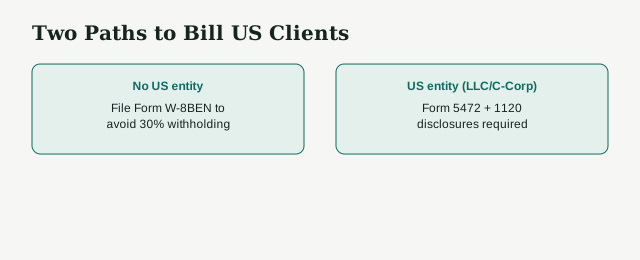
Why US Clients Are the Next Big Step for Bangalore Founders
Bangalore has become the startup capital of India, producing thousands of tech-driven companies and SaaS startups each year. For many of these businesses, expanding to serve clients in the US is the natural next step. American clients tend to value quality, reliability and technical innovation i.e. areas where Indian founders excel. Moreover, the US market’s purchasing power means better margins and predictable recurring revenue for Indian service providers. However, once you start billing American customers, the US tax system becomes relevant. Whether you’re offering SaaS subscriptions, digital marketing services, or remote product development, the IRS expects certain compliance procedures to be followed. Ignoring them can result in financial penalties or loss of credibility with US-based payment processors.Understanding How the US Tax System Affects Indian Founders
When Indian companies or freelancers receive payments from US clients, the IRS views it as income sourced from the US. Depending on how your business is structured, taxes and reporting obligations may apply. For example, if you set up a US entity such as a Delaware LLC or C-Corp, you must comply with IRS requirements like Form 5472, Form 1120, and foreign ownership disclosures. If you’re working directly from India without a US entity, you’ll likely need to provide your US clients with Form W-8BEN or W-8BEN-E. This certifies that you are a non-US taxpayer, helping you avoid unnecessary 30 percent withholding on payments. Most Bangalore founders who work with experienced cross-border tax consultants manage this process efficiently and avoid delays in receiving funds.The Importance of Structuring Your US Payments Properly
One of the most common mistakes Indian founders make is mixing business and personal transactions when collecting payments from US clients. For example, receiving business revenue in a personal PayPal account or using unverified platforms for USD transactions can lead to reporting issues and compliance flags. To stay compliant, open a dedicated business account—either in the US through providers like Mercury or Stripe Atlas, or locally in India with international transfer capabilities. Always ensure that every transaction is traceable, documented, and aligned with your company’s invoicing system. Professional assistance from experienced cross-border tax advisors can help you design payment workflows that meet both Indian and US tax standards.Why Compliance Should Be Part of Your Growth Strategy
Many founders view compliance as a burden, but in reality, it’s a competitive advantage. A company that maintains transparent books, timely filings, and valid tax documentation builds stronger trust with global clients. US businesses prefer working with vendors who follow proper reporting standards—it reduces their risk of audit or legal exposure. Moreover, proper compliance helps Indian founders access premium platforms like Stripe, Deel, and Payoneer without restrictions. These platforms verify your entity’s tax status before approving payouts. Having valid IRS documents and accurate filings ensures uninterrupted cash flow.Avoiding Double Taxation When Dealing with the US
The India-US Double Taxation Avoidance Agreement (DTAA) protects Indian founders from being taxed twice on the same income. However, this benefit applies only if you maintain proper documentation and file your taxes correctly in both jurisdictions. For instance, if your US LLC is disregarded for tax purposes, the income typically passes through to you as an Indian resident. You report it under Indian tax laws while using DTAA provisions to claim credits or exemptions for US taxes already paid. Without expert handling, founders often misclassify this income, resulting in overpayment or IRS penalties. Partnering with professionals familiar with both systems helps you optimize taxes and remain compliant across countries.Streamlining Finances Through Automation and Cloud Tools
Once you start scaling internationally, manual bookkeeping and invoicing can quickly become overwhelming. Using accounting software such as QuickBooks, Zoho Books, or Xero ensures accuracy and transparency. These platforms automatically reconcile transactions and generate tax-ready reports. In addition, you can integrate financial automation tools with your CRM and payment gateways. This helps you track cash flow, automate invoices, and calculate tax liabilities seamlessly. The combination of automated operations and compliance-ready systems is what allows modern founders to expand confidently across borders.Filing the Right IRS Forms
If you operate a US entity, it’s crucial to know which IRS forms apply to your situation. The most common ones include: Form 5472: Used by foreign-owned US entities to report related-party transactions. Form 1120: The annual return for corporations in the US, often filed together with Form 5472. Form W-8BEN or W-8BEN-E: Used by Indian individuals or entities working directly with US clients. Missing or incorrectly filing these forms can lead to automatic penalties starting at $25,000. To avoid such setbacks, it’s best to hire professionals who can prepare and submit them accurately on your behalf.Using a Tax-Efficient Business Model
When your revenue starts growing, setting up the right business structure can make a big difference in tax efficiency. For SaaS startups, a US LLC or C-Corp might make sense for building client trust and simplifying dollar transactions. However, you should always analyze how profits will flow back to India. Some founders prefer to register an Indian Private Limited company and work with payment partners who handle foreign remittances under FEMA guidelines. Others choose to maintain a US entity for client-facing operations while keeping development and management in India. The optimal setup depends on your client base, transaction volume, and future goals. Working closely with experts ensures that your structure minimizes tax liabilities while meeting regulatory requirements.Maintaining IRS and Indian Compliance Together
Indian founders managing US clients must juggle two tax systems—Indian and American. While this may sound complex, synchronization is possible with the right approach. You must ensure: All invoices match corresponding transactions in both currencies. Your US entity or personal details appear consistently across tax forms. Annual filings are completed before respective deadlines in both countries. Proper documentation not only keeps you compliant but also helps if you need business loans, investors, or partnerships later.Building Long-Term Financial Trust
Scaling globally is not just about earning revenue—it’s about sustainability. Consistent reporting, clean bookkeeping, and transparent cross-border payments show professionalism. It assures both the IRS and your Indian tax authorities that your business operates ethically. In the long term, this credibility also helps attract US investors and clients. Many American companies require proof of tax compliance before signing contracts. When your business already follows international standards, onboarding new clients becomes faster and smoother.Real Examples of Compliance Mistakes to Avoid
Many Indian founders in Bangalore learn compliance lessons the hard way. Here are a few real-world examples that show what can go wrong: 1. A SaaS founder ignored filing Form 5472 for his US LLC and faced a $25,000 fine for late submission. 2. A freelancer using a personal PayPal account to receive US payments was flagged for irregular transactions. 3. A startup founder failed to renew their W-8BEN form, leading to 30 percent withholding on all client payments. Each of these situations could have been prevented with timely assistance and documentation.Creating a Scalable and Compliant Growth Strategy
Compliance shouldn’t slow your growth—it should enable it. Once your foundation is set correctly, expanding becomes easier. Here are the key pillars of a scalable, compliant strategy: 1. Maintain separate accounts for international revenue. 2. Automate bookkeeping and invoicing wherever possible. 3. Keep all IRS and Indian filings updated annually. 4. Use the DTAA to prevent double taxation. 5. Consult professionals familiar with cross-border compliance. When these pillars are in place, scaling your US clientele becomes a smooth process rather than a stressful one.Future-Proofing Your Business
With digital transformation accelerating, the future belongs to founders who embrace compliance automation and transparent financial structures. As US clients become increasingly cautious about legal and tax exposure, working with companies that meet international standards becomes a major selling point. If you operate from Bangalore, it’s wise to partner with experts who understand both Indian and American systems. They’ll not only ensure you stay compliant but also optimize your financial processes for long-term efficiency.Conclusion
Scaling your business to serve US clients is one of the best ways for Indian founders in Bangalore to grow globally. But sustainable expansion requires more than just sales—it needs compliance clarity, efficient structuring, and financial transparency. By planning your tax and operational framework early, you can prevent legal complications and unlock smoother global payments. Modern automation tools, efficient accounting, and partnerships with experienced tax and accounting partners allow you to focus on what truly matters—building a global business. With the right foundation, your Bangalore-based startup can confidently scale US clients while staying 100 percent compliant and future-ready.Need Help Scaling to US Clients From Bangalore?
Book a free consultation today.
At LedgersCFO, we help Bangalore-based founders structure their US client relationships correctly from day one, whether that means filing W-8BEN forms, setting up a compliant Delaware entity, or coordinating Form 5472 and DTAA filings across both countries.
FAQs
Do I need a US entity to work with US clients from Bangalore?
Not necessarily. You can invoice US clients directly from India as a freelancer or Indian company, using Form W-8BEN (individuals) or W-8BEN-E (entities) to confirm your non-US status and avoid the default 30 percent withholding. Many founders still choose to form a Delaware LLC or C-Corp for client trust and easier payment processing, but it is not a legal requirement to bill US customers.
What IRS forms apply if I set up a US LLC or C-Corp?
A foreign-owned US entity generally needs to file Form 5472 alongside Form 1120 to report transactions with its foreign owner, and the penalty for missing Form 5472 starts at $25,000 per form per year. Working without a US entity instead means providing clients with Form W-8BEN or W-8BEN-E rather than filing 5472 or 1120.
How can I avoid double taxation on US income?
The India-US Double Taxation Avoidance Agreement (DTAA) lets you claim credits or exemptions in India for tax already paid in the US, but only if you maintain proper documentation and file correctly in both countries. Misclassifying pass-through income from a disregarded US LLC is a common way founders lose this benefit.
Why do payment platforms like Stripe or Payoneer ask for tax documents?
Platforms verify your entity's tax status, including W-8BEN, W-8BEN-E, or EIN documentation, before approving payouts. Missing or outdated forms are a common reason Bangalore founders see delayed or blocked payments from US clients.
How does LedgersCFO help Bangalore founders scale to US clients?
We handle the US and Indian sides together, from W-8BEN and Form 5472 filings to DTAA-compliant reporting and payment workflow setup, so you can bill US clients without payment delays or IRS penalties.