How to Build a Startup Budget for Growth
Many startups fail not because of bad ideas, but because they run out of money. That’s why a solid budget matters. A well-structured budget helps you track expenses, set realistic goals, and keep your business on the growth path. This blog explains step-by-step how to create a practical startup budget that supports long-term success.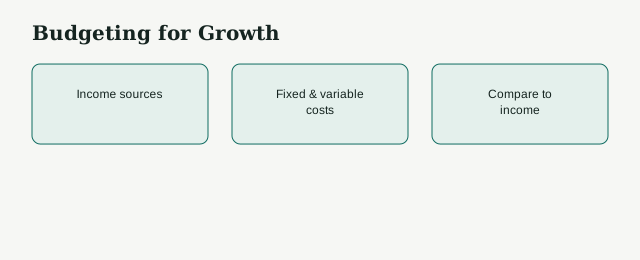
1. Define Your Budget Period and Goals
Start by choosing a timeframe. Most businesses use monthly or quarterly budgets. Then set specific goals for that period:- A specific revenue target for the period
- A maximum expense limit you will not exceed
- A target profit margin to aim for
2. List All Sources of Income
Identify where your money comes from:- Revenue from product or service sales
- Recurring subscription fees from customers
- Consultancy work or licensing arrangements
- Any other income streams specific to your business
3. Identify Fixed Costs
Fixed costs stay the same every period. Common examples:- Rent or lease payments
- Salaries and wages, including the 15.3% self-employment tax (12.4% Social Security plus 2.9% Medicare) on any owner draws taxed as self-employment income
- Insurance premiums
- Software subscriptions
4. Estimate Variable Costs
Variable costs change with activity levels. Typical variable costs:- Cost of goods sold or materials
- Transaction fees (commonly 2.9% + $0.30 per card payment)
- Shipping and delivery
- Hourly labor
5. Plan for One-Time and Seasonal Expenses
Some expenses occur once or seasonally:- Equipment purchases
- Marketing campaigns
- Annual license fees
- Holiday staffing
6. Calculate Total Expenses and Compare to Income
Add fixed, variable, and one-time costs. Compare this total to your projected income:- If expenses exceed income, identify areas to cut or adjust your revenue projections.
- If income exceeds expenses, consider reallocating surplus toward savings or investment.
7. Build Your Budget Spreadsheet
Use a simple spreadsheet with columns for:- Category (e.g., Fixed, Variable, One-Time)
- Line item (e.g., Rent, Materials)
- Estimated cost
- Actual cost
- Variance (Actual minus Estimated)
8. Monitor and Adjust Regularly
A budget is a living tool that should change as your business changes. Each period, walk through the same review:- Update actual income and expenses
- Compare against estimates
- Adjust next period's budget based on trends
Tools to Simplify Budgeting
- Spreadsheet templates in Excel or Google Sheets
- Budgeting features in QuickBooks or Xero
- Dedicated apps like Float or LivePlan
Common Budgeting Mistakes and How To Avoid Them
- Underestimating costs: Always add a buffer of 5 to 10 percent for unexpected expenses.
- Overly optimistic sales: Base projections on historical data or conservative estimates.
- Ignoring cash flow timing: Track when money comes in and goes out to avoid shortfalls.
Putting Your Budget to Work
Use your budget to:- Set monthly spending limits
- Plan marketing and hiring
- Negotiate with suppliers using volume forecasts
- Report progress to investors and stakeholders
What You Gain from this Smart Budgeting
This Effective budgeting plan lets you make faster decisions, manage costs, and plan ahead with confidence. It helps you identify unnecessary spending, fund your core operations, and track performance over time. Most importantly, it keeps your startup financially healthy and aligned with your goals.Partner with LedgersCFO
Book a free consultation with LedgersCFO.
Creating and maintaining a budget takes time and expertise. LedgersCFO helps startups build realistic budgets, set up tracking systems, and review performance each month. Our team ensures that your budget aligns with your goals and adapts as your business evolves.FAQs
How often should I update my business budget?
Monthly updates are ideal. Review actuals against estimates to adjust for the next period.
What’s the difference between fixed and variable costs?
Fixed costs, like rent and salaries, stay the same regardless of sales, while variable costs rise or fall with production or revenue, which is why separating the two makes a budget far more useful for planning.
Should I include a contingency in my budget?
Yes, adding a 5 to 10 percent contingency line to your budget helps cover unexpected expenses without forcing you to redo the whole plan every time something unplanned comes up.
Can I use budgeting software instead of a spreadsheet?
Absolutely, since many accounting tools now include budgeting features built in, so it usually makes sense to choose whichever one fits your existing workflow rather than adding a separate tool.
How does LedgersCFO support budget creation?
LedgersCFO works with startups to forecast income, categorize expenses, and set up tracking dashboards. We review results monthly and recommend adjustments to keep you on course.