How to Scale Financial Operations
About one-third of fast-growing companies cite financial problems as the primary obstacle to expansion. That's a huge number, and it highlights how many businesses struggle when their financial systems can't keep pace with their growth.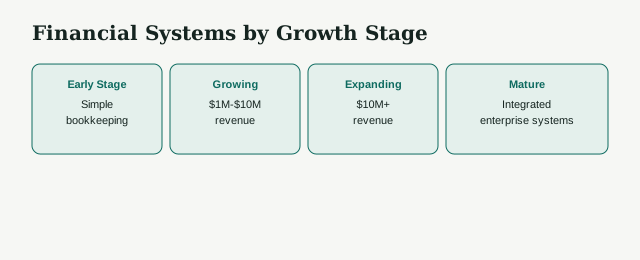 But the good news is that companies that get their financial operations right early can turn complexity into a competitive advantage. Here's how to scale your financial systems the right way.
Why Financial Operations Break During Growth
Most businesses start simple like consider your business only, you track expenses in a spreadsheet, use basic accounting software, and handle everything yourself. This works fine when you're small. But as you grow, everything gets harder. More transactions mean more work. Multiple locations create new complications. Different business units have different needs. Common problems growing companies face:- Too many transactions to handle manually
- Multiple entities or locations that need separate tracking
- New rules and regulations you didn't have to worry about before
- Reports that take forever to create and aren't very useful
- Systems that crash or slow down when you need them most
How Financial Needs Change as You Grow
Your financial needs are totally different at each stage of growth. What works at $500K revenue won't work at $5M revenue. Many growing companies also need to shift from cash-basis to accrual-basis accounting, a change governed by IRS Publication 538.Early Stage Companies
When you're just starting, you need basic stuff:- Simple bookkeeping to track income and expenses
- Cash flow management so you don't run out of money
- Basic controls so mistakes don't kill you
Growing Companies
Once you hit your first million or two in revenue, things get more complex:- You might have multiple business units or locations
- Revenue recognition becomes trickier
- You need better reporting to understand what's working
- Investors or lenders want more detailed information
Expanding Businesses
When you're doing $10M+ in revenue, you need enterprise-level capabilities:- Sophisticated financial systems that can handle volume
- Advanced compliance and regulatory management
- Detailed analytics to guide strategic decisions
- Systems that can support acquisitions or major partnerships
Mature Companies
Large companies need fully integrated financial operations:- Multiple systems working together seamlessly
- Real-time reporting across all business units
- Financial planning that guides major strategic decisions
- Operations that can support potential sales or public offerings
Building Financial Systems That Actually Scale
You can't just patch your existing systems forever. At some point, you need to build something that can handle serious growth. Key components of scalable financial operations:Systems That Handle Volume
Your software needs to process thousands of transactions without slowing down. Cheap accounting software works fine until it doesn't. The SBA's guide to managing business finances recommends formalizing your bookkeeping systems well before you outgrow them.Multi-Entity Management
If you have multiple business units, locations, or legal entities, your systems need to handle them separately while rolling everything up for consolidated reporting.Integrated Processes
Your accounting, tax, budgeting, and financial planning should work together, not fight each other. When systems don't talk to each other, you waste tons of time moving data around.Automated Routine Work
Anything that happens the same way every time should be automated. Manual processes don't scale and create opportunities for expensive mistakes.Real Example: How One Company Scaled Successfully
Take a look at how a healthcare company solved their scaling problems. They were doing eight figures in revenue but their financial operations were falling apart. Their problems:- Multiple business entities that weren't managed properly
- Financial reports that took weeks to create
- Systems that couldn't handle their transaction volume
- No standardized processes across different parts of the business
- Switched to systems designed for complex businesses
- Brought in experts who understood multi-entity operations
- Standardized processes across all their business units
- Set up real-time reporting instead of month-end scrambles
- Clean financial statements ready for investors
- All their financial services are working together smoothly
- Better information for making business decisions
- Professional operations instead of makeshift solutions
Common Pitfalls When Scaling Financial Operations
- Waiting too long to upgrade: Many companies try to squeeze more life out of systems that are already breaking. This creates bigger problems later.
- Choosing cheap over scalable: Saving money on financial systems usually costs more in the long run when you have to rebuild everything.
- Trying to do everything in-house: Some financial functions require specialized expertise that's expensive to hire full-time.
- Not planning for complexity: Your simple business model might become complex quickly. Plan your financial systems for where you're going, not where you are.
When to Upgrade Your Financial Operations
Reporting delays typically worsen once a company crosses $20 million in annual revenue, and by $50 million manual processes usually break down completely. You need an upgrade when:- Financial reports take more than a few days to create
- You're making decisions based on old or incomplete information
- Compliance issues are becoming frequent problems
- Your team spends more time fighting systems than analyzing results
- Investors or partners are asking for information you can't easily provide
Best Practices for Effective Financial Scaling
- Start with the end in mind: Build systems that can handle 10x your current volume, not just 2x.
- Integrate everything: Your accounting, tax, budgeting, and reporting should work together seamlessly.
- Automate the routine stuff: Anything that happens the same way every time should be automated.
- Get expert help: Complex financial operations require specialized knowledge. Don't try to figure it out yourself.
- Compliance plan: Rules get more complex as you grow. Build compliance into your systems from the start.
- Test everything: Make sure your new systems actually work before you fully switch over.
Industry-Specific Considerations
Different types of businesses have different challenges when scaling financial operations.- Technology companies need to handle complex revenue recognition, stock compensation, and international operations.
- Retail businesses need systems that manage inventory, multiple locations, and high transaction volumes.
- Manufacturing companies need cost accounting, inventory management, and supply chain integration.
- Service businesses need project accounting, resource utilization tracking, and client billing systems.
Choosing the Right Partners for Scaling
Look for these qualities:- Experience with businesses similar to yours
- Systems designed for growing companies
- Ability to handle complex business structures
- Modern communication and collaboration tools
- Comprehensive services so you don't need multiple vendors
- Firms that mostly work with small, simple businesses
- Systems that require major customization to work for you
- Partners who can't explain how they'll handle your growth
- Communication that's slow or old-fashioned
Getting Started with Financial Scaling
- Figure out your biggest financial operations problems right now.
- Decide what your financial needs will be in 2-3 years based on your growth plans.
- Research partners and systems that can bridge the gap between where you are and where you're going.
- Create a transition plan that doesn't disrupt your current operations.
- Implement new systems during slower periods when you have time to work out any issues.
- Train your team on new processes and make sure everyone understands how things work.
Ready to Take Control of Your Finances?
[Book Your Free Consultation Today]
At LedgersCFO, we work closely with founders to simplify financial planning and provide clear strategies for growth. From budgeting to forecasting, our experienced team ensures your numbers make sense and align with your goals.FAQs
Why is financial planning important for early-stage startups?
Financial planning helps founders understand their cash flow, budget wisely, and make informed decisions. Without it, startups often run out of money faster than expected.
How does LedgersCFO support founders with budgeting?
At LedgersCFO, we work with founders to create practical budgets that fit their current resources while preparing them for sustainable growth.
What makes LedgersCFO different from hiring an in-house CFO?
Hiring a full-time CFO can be costly for early-stage startups. LedgersCFO provides the same level of expertise at a fraction of the cost, tailored to your needs.
Can LedgersCFO help with investor reporting?
Yes. Our team ensures your financial systems are investor-ready, with clear metrics and reports that build confidence during fundraising.
When should a founder consider working with LedgersCFO?
If you’re struggling with budgeting, forecasting, or preparing for funding rounds, it’s the right time to bring in expert financial support.