Net Dollar Retention and Your SaaS
Your customers pay you money. Some increase their spending over time, others reduce it, and some cancel entirely. Net Dollar Retention measures the overall result of these changes. The SBA's guide to managing business finances highlights recurring revenue as one of the strongest predictors of small business survival. Many founders focus on getting new customers. While that’s important, growing revenue from existing customers is often easier and more profitable. This blog explains what Net Dollar Retention is and why it matters for your SaaS growth.What Net Dollar Retention Actually Means
 Net Dollar Retention (NDR) shows whether you're making more or less money from your existing customers compared to last year.
If you had customers paying $100,000 total last January, NDR tells you how much those same customers are paying now. Maybe it's $110,000 (good) or maybe it's $85,000 (bad).
NDR includes:
Net Dollar Retention (NDR) shows whether you're making more or less money from your existing customers compared to last year.
If you had customers paying $100,000 total last January, NDR tells you how much those same customers are paying now. Maybe it's $110,000 (good) or maybe it's $85,000 (bad).
NDR includes:
- Revenue increases from upgrades and upsells
- Revenue decreases from downgrades.
- Lost revenue from customers who canceled
The NDR Formula
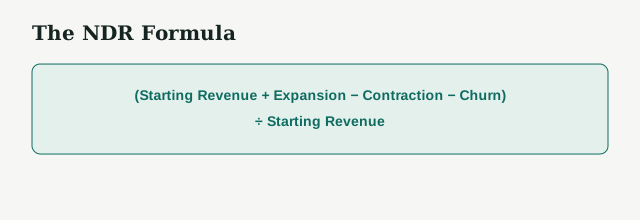
NDR = (Starting Revenue + Expansion - Contraction - Churn) ÷ Starting Revenue- Starting Revenue: What existing customers paid you at the beginning
- Expansion: Extra money from upgrades, upsells, and price increases
- Contraction: Money lost from downgrades or reduced usage
- Churn: Revenue lost from customers who canceled
Simple NDR Calculation Example
You start the year with existing customers paying $200,000 annually. During the year:- Expansion revenue: +$40,000 (customers upgraded)
- Contraction: -$15,000 (some customers downgraded)
- Churn: -$10,000 (customers who canceled)
Why NDR Matters More Than You Think
- It predicts your future. Companies with high NDR can grow even if they stop acquiring new customers. Companies with low NDR need constant new customers just to stay flat.
- Investors love it. An NDR above 100% shows your product is sticky and valuable. Investors pay higher valuations for companies with strong NDR.
- It's easier than new customer acquisition. Selling more to existing customers costs less than finding and convincing new ones.
Good NDR Benchmarks by Company Stage
- Early-stage startups: 100%+ is solid
- Growth-stage companies: 110%+ shows good momentum
- Mature SaaS companies: 120%+ is what top performers achieve
Common NDR Calculation Mistakes
- Including new customer revenue. NDR only tracks existing customers. New customers don't count.
- Using inconsistent time periods. Pick monthly or annual tracking and stick with it.
- Ignoring cohort differences. Your enterprise customers might have 130% NDR, while small businesses have 85%. Understanding these differences helps you make better decisions.
- Bad data quality. If your revenue tracking is messy, your NDR calculation will be wrong.
How to Improve Your NDR
Make Your Product Stickier
The best way to improve NDR is to make customers more successful with your product. When customers get real value, they stick around and often buy more. Focus on:- Better onboarding so customers see value quickly
- Regular check-ins to ensure they're getting results
- Feature improvements based on customer feedback
- Usage analytics to spot customers who might churn
Smart Pricing Strategies
- Tiered pricing makes it easy for customers to upgrade as they grow. Design your pricing so customers naturally move up tiers over time.
- Annual contracts reduce churn and improve cash flow. Offer discounts for annual payments to incentivize longer commitments, though upfront multi-year payments have their own tax treatment under IRS rules for advance payments (see IRS Publication 538).
- Usage-based pricing grows with your customers. As they use your product more, they automatically pay more.
Proactive Customer Success
Don't wait for customers to complain. Reach out when you see warning signs like decreased usage or failed payments. Set up alerts for:- Customers whose usage is declining
- Accounts that haven't logged in recently
- Payment failures or billing issues
- Support tickets indicating frustration
Cross-Selling and Upselling Done Right
Only suggest additional products or upgrades when they genuinely help the customer. Pushy sales tactics hurt retention. Good upselling happens when:- Customers are already successful with your core product
- The upgrade solves a real problem they have
- You can show a clear ROI for the additional cost
Setting Up NDR Tracking
Most startups track NDR monthly or quarterly. Monthly gives you faster feedback, quarterly smooths out short-term fluctuations. Data you need:- Customer subscription amounts over time
- Upgrade and downgrade amounts with dates
- Churn dates and revenue amounts
- Clear definitions of what counts as expansion vs new customer revenue
- Your billing system (Stripe, Chargebee, etc.)
- Customer success platforms (ChurnZero, Gainsight)
- Financial tracking tools
- Custom dashboards for executive reporting
NDR and Fundraising
Investors use NDR to evaluate your business model and growth potential. Here's what they're thinking:- NDR above 120%: This company has a strong product-market fit and can grow efficiently
- NDR 100-120%: Solid business with room for improvement
- NDR below 100%: Red flag – customers aren't finding enough value
Improve Your NDR with Expert Help
[Schedule Your Free Consultation]
At LedgersCFO, we help SaaS startups track and improve their Net Dollar Retention through better financial systems and strategic guidance. Our team knows which metrics matter most for fundraising and growth. Don't let poor NDR tracking hurt your next funding round - let us help you build systems that impress investors and drive sustainable growth.FAQs
What is Net Dollar Retention?
Net Dollar Retention (NDR) measures how much recurring revenue you keep from existing customers after upgrades, downgrades, and cancellations within a specific period.
Why is Net Dollar Retention important for SaaS companies?
NDR shows whether your revenue is growing from existing customers or shrinking. A strong NDR means customers are not only staying but also spending more.
What is considered a good Net Dollar Retention rate?
For SaaS companies, an NDR above 100% is generally good. It means expansion revenue is higher than lost revenue from churn and downgrades.
How can SaaS companies improve Net Dollar Retention?
They can improve NDR by reducing churn, upselling or cross-selling, and ensuring strong customer support.
How does LedgersCFO help businesses manage Net Dollar Retention?
LedgersCFO helps companies track and analyze NDR, identify churn and growth opportunities, and provide strategic guidance to improve long-term customer value.