Outsourcing Tax Prep for CPA Firms
Outsourcing tax preparation is fast becoming a strategic move for CPA firms and growing businesses. When tax seasons tighten and regulations shift, delegating routine preparation tasks frees up senior staff to focus on advisory work and growth. At the same time, properly chosen partners bring reliable processes, technology, and quality controls that reduce errors and speed filing cycles.
Below is a clear, practical guide that explains why firms turn to outsourced support, how the model works, and how to integrate cpa bookkeeping and broader accounting outsourcing without losing control.
Outsourcing Tax Preparation Benefits for CPA Firms
Outsourcing tax preparation helps CPA practices scale capacity without the long lead time and cost of hiring seasonal staff. It also smooths workflow peaks so deadlines are met consistently.
Key business advantages include:
-
Lower overhead for staffing and training
-
Faster turnaround on returns and reviews
-
Standardized processes and checklists for quality control
-
Access to specialists for complex returns or international filings
For example, when a firm faces a sudden increase in corporate returns, an outsourcing partner can handle volume while the firm keeps control over client relationships and final review. This split of duties reduces risk and improves client satisfaction.
Outsourcing Tax Preparation for Business Owners
Outsourcing tax preparation is not only for accounting firms. Businesses with in-house finance teams often outsource to gain accuracy and free internal resources for strategic work.
Businesses typically outsource to:
-
Reduce the burden on finance teams during peak seasons
-
Improve compliance for multi-state and cross-border filings
-
Gain access to experienced preparers for corporate tax preparation
When owners choose to outsource, they should expect clear ownership of deliverables, fixed timelines, and transparent pricing. This ensures the arrangement supports accounting goals without adding management overhead.
Outsourcing Tax Preparation Workflows Explained
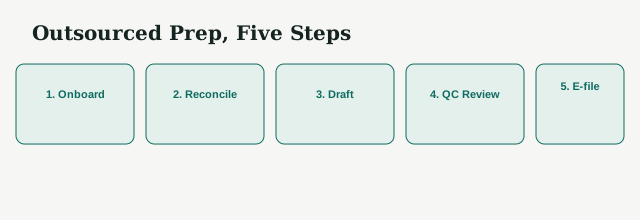
Outsourcing tax preparation works best when the process is mapped end to end. A reliable partner follows a standard workflow that ties into your bookkeeping and reporting systems, and returns are transmitted through the IRS e-file system for tax professionals.
Typical steps include:
-
Onboarding and access setup to accounting records.
-
Trial balance review and reconciliation of key accounts.
-
Drafting returns and preparing schedules.
-
Internal quality checks and manager review.
-
Final review by the firm or business and e-filing.
Because each step includes sign-offs, responsibility stays clear. Additionally, technology like secure portals and task trackers improves visibility and reduces back-and-forth email.
Choosing a Partner for Outsourcing Tax Preparation
Selecting the right outsourcing partner matters. Look for firms that combine technical depth with strong operational controls and follow the standards set out in the IRS's Circular 230 for tax professionals.
Choose a partner that:
-
Demonstrates experience with corporate tax preparation and multi-state rules
-
Provides documented quality controls and turnaround SLAs
-
Uses secure file transfer and data encryption for client records
-
Offers transparent fee structures and clear service scopes
LedgersCFO works with CPA firms and businesses to tailor these elements. We provide a dedicated workflow, consistent reviewer assignments, and a security-first approach to client data.
Outsourcing Tax Preparation with CPA Bookkeeping and Accounting Outsourcing
Integrating cpa bookkeeping and accounting outsourcing with tax preparation creates a smooth, year-round solution. When bookkeeping is handled consistently, the tax preparer receives clean, reconciled data. This reduces surprises at filing time.
Integration points to prioritize:
-
Monthly reconciliations to catch discrepancy early
-
Consistent chart of accounts so tax classifications are stable
-
Regular communication between bookkeeping and tax teams
-
Shared task lists and a single document repository
Accounting outsourcing that bundles bookkeeping with tax work reduces handoff errors and lowers total costs. It also creates a single point of accountability for finance processes.
Managing Security, Quality, and Compliance Risks
Outsourcing introduces risk if not managed correctly. However, these risks are manageable with the right controls, and partners should make this a priority.
Best practices include:
-
Signed data protection agreements and role-based access controls
-
Formal quality checklists and peer reviews for every return
-
Periodic performance reviews and client feedback loops
-
Clear incident response and remediation plans
When risks are handled proactively, outsourcing delivers predictable outcomes and strengthens compliance posture. Under Section 6694 of the tax code, preparers themselves face penalties starting at $1,000 (or 50% of the fees earned) for careless errors, rising to $5,000 (or 75%) for willful or reckless conduct, so a partner's internal quality controls matter as much as yours.
Cost and ROI Considerations for Outsourcing Tax Preparation
Many firms and businesses see outsourcing as an expense, but it should be evaluated as an investment with measurable returns.
Consider these ROI factors:
-
Reduced cost per return compared with hiring seasonal staff
-
Faster cycle times that improve client satisfaction and referrals
-
Less time spent on training and supervision of temporary hires
-
Fewer errors and penalty risks that carry real cost savings
A short pilot engagement often shows the true economics. Most clients find that outsourcing lowers total cost while raising service quality.
How to Transition to Outsourced Tax Preparation Smoothly
Transition planning avoids disruption. A phased approach helps your team keep control while building trust with the provider.
A smooth transition often follows these steps:
-
Run a trial with a defined return subset
-
Map responsibilities and finalize the checklist templates
-
Confirm communication cadence and file exchange methods
-
Move additional return types after validating quality and timing
Communication and clarity of expectations are the two factors that predict a successful transition.
Why LedgersCFO for Outsourcing Tax Preparation
LedgersCFO combines practical outsourcing experience with secure, documented workflows. We help CPA firms and businesses integrate tax services with cpa bookkeeping and broader accounting outsourcing.
What clients appreciate:
-
Dedicated teams matched to your industry and return types
-
Clear turnaround times and manager review points
-
Secure systems for document and data handling
-
Advisory that extends beyond filing to improve accounting processes
Our goal is to reduce the routine burden so firms and businesses can focus on strategy, growth, and client relationships.
Ready to reduce cost and improve turnaround on your filings
At LedgersCFO, we help CPA firms and growing businesses build a reliable, secure, and efficient tax preparation workflow. Our team reviews your existing process, identifies gaps, and creates a phased outsourcing plan that matches your service model. We focus on predictable turnaround times, consistent quality checks, solid documentation, and complete confidentiality.
With structured workflows, specialized tax teams, and strong communication practices, we ensure every filing meets the highest standards while reducing the pressure on your internal staff.
FAQs
Which types of returns are best to outsource first?
Start with volume returns or complex corporate filings that strain internal resources, such as multi-state returns or foreign-owned entity filings.
How does outsourcing affect client confidentiality?
A reputable provider uses encrypted transfers, role-based access, and confidentiality agreements to protect client data.
Can outsourcing reduce penalties and risk?
Yes. Standardized processes, expert reviews, and reconciled bookkeeping reduce errors that often lead to penalties.
How quickly can a firm scale up using outsourcing?
A firm can scale within weeks by shifting returns to a trusted partner, provided onboarding and access are prepared promptly.
Does LedgersCFO support ongoing bookkeeping as well as tax preparation?
Yes. We offer integrated cpa bookkeeping and accounting outsourcing that aligns monthly books with tax filing needs.