Outsourcing Tax Preparation for US Businesses
Outsourcing tax preparation for US businesses is now a practical solution for companies that are handling larger compliance demands and complex filing requirements. As a business expands, managing multi state taxes, payroll filings, and federal obligations can put pressure on internal teams. Outsourcing gives businesses access to trained professionals, organized processes, and reliable support throughout the year. This approach helps reduce filing errors, avoid penalties, and free internal teams to focus on growth and operational priorities.
Why businesses outsource tax preparation
Outsourcing frees internal teams from repetitive filing work so they can focus on strategy and growth. It also gives access to specialists, up-to-date tax know-how, and software that many small in-house teams can’t afford to maintain. In practice, that means faster turnaround, fewer mistakes, and more predictable costs.
Two practical advantages stand out:
-
predictable capacity during peak season
-
access to expertise for specialty filings (multi-state, foreign-owned entities, etc.)
Both reduce the risk of missed deadlines and penalties, which are often more costly than the outsourcing fees.
Real cost logic: when outsourcing pays
Think of outsourcing as a variable cost that replaces fixed overhead. Hiring full-time tax staff means salaries, benefits, training, and software. Outsourcing often lowers total payroll expense while letting you scale up or down as needed. Studies and industry reports show meaningful savings when companies move routine tax processing to external providers, especially when firms leverage global delivery models and automation.
Put simply: if your peak-season workload is large but short, outsourcing usually wins on cost and flexibility.
Compliance musts: credentials and controls
Outsourcing does not remove responsibility. The company remains responsible for accurate returns and secure handling of taxpayer data. Choose providers who demonstrate strong controls, confidentiality, and qualified preparers. In the United States each paid preparer must have a valid Preparer Tax Identification Number (PTIN), and firms should avoid “ghost preparers” who refuse to sign returns or provide credentials. Under Section 6694 of the tax code, a preparer's own penalties for unreasonable positions start at $1,000 (or 50% of fees earned), rising to $5,000 (or 75%) for willful or reckless conduct. Confirm PTINs and ask about the provider’s quality checks and review workflows.
Ask for evidence of: background checks, encryption in transit and at rest, and a written error correction process.
What tasks companies commonly outsource
Outsourcing scope ranges from simple returns to comprehensive tax operations. Typical services include:
-
corporate and partnership tax return preparation and filing
-
multi-state compliance and nexus work
-
payroll tax processing and year-end forms
-
foreign-owned entity filings and Form 5472 support
-
quarterly estimated tax calculations and projections
Pick the scope that removes pain points but keeps critical oversight in-house. For example, retain strategic tax planning and sign-off internally while outsourcing preparation and routine filings.
How outsourcing improves accuracy and speed
Outsourcing firms use standardized checklists, dedicated review teams, and tax platforms that integrate with accounting systems. That reduces manual slips and speeds delivery. Many providers apply automation to match receipts, classify transactions, and populate returns, cutting cycle time and human error. These process improvements matter because audits and notices usually follow mistakes made under time pressure.
A good provider documents each step and produces workpapers so your in-house team can verify results without redoing the work.
Picking the right outsourcing partner
Choosing a vendor is a mix of capability, culture fit, and risk control. Use this short checklist when evaluating providers:
-
can they handle your entity types and jurisdictions?
-
do they assign a dedicated engagement manager?
-
what review and escalation processes exist?
-
how do they secure and transfer files?
-
what are their fees and how do they scale?
Ask for references from companies of similar size and complexity. A provider that worked with other US businesses and cross-border clients will better understand your pitfalls.
Common objections and practical answers
Objection: “We’ll lose control.”
Answer: Keep final sign-off and tax strategy in-house. Outsource preparation and let the provider produce review-ready workpapers.
Objection: “Is our data safe?”
Answer: Require SOC2 or equivalent controls, encrypted file transfer, and a documented breach policy.
Objection: “Will outsourced work be lower quality?”
Answer: Quality varies by vendor. Insist on sample workpapers, staff credentials, and a clear quality assurance process.
How to structure the relationship
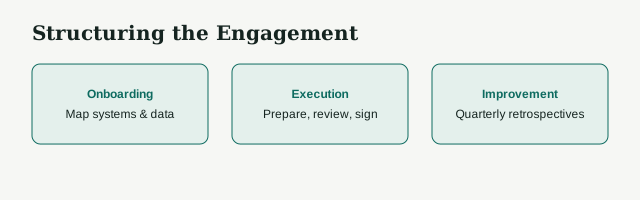
A practical engagement has three stages:
-
Onboarding: map systems, data feeds, and responsibilities.
-
Execution: provider prepares returns; your team reviews and signs.
-
Continuous improvement: monthly or quarterly retrospectives to reduce friction and shave time.
Include SLA metrics (turnaround time, error rates) and scheduled checkpoints. That keeps work predictable and measurable.
Quick implementation checklist
-
confirm which returns you will outsource this season
-
request provider’s security and PTIN evidence
-
establish a shared file folder and naming convention
-
set review deadlines and final sign-off roles
-
schedule a post-season review to fix bottlenecks
These simple steps reduce surprises and keep the tax calendar tidy.
How LedgersCFO Supports Outsourcing Tax Preparation for US Businesses
US businesses outsource tax preparation to save time, reduce filing errors, and keep compliance on track. LedgersCFO is designed around these needs, offering organized support that helps your team focus on growth instead of paperwork.
A simple and clear onboarding
We review your entity type, tax history, and current process to understand exactly what needs to be filed. You receive a clear checklist and a structured filing plan.
Support for multi state and cross border filings
Many US businesses operate in several states or deal with international owners and vendors. We manage these filings, including corporate returns, foreign owned entity requirements, payroll reports, and related documentation.
Clean records for accurate filings
If your books need adjustments before filing, we organize them so your returns are accurate. Every filing goes through a careful review to avoid last minute issues.
Scalable help as your company grows
Your tax workload grows as your business grows. We increase support whenever needed so you never deal with capacity issues during busy seasons.
Secure handling of financial data
We use controlled access and encrypted workflows to protect your information. Every document follows a clear path from preparation to review.
LedgersCFO provides dependable support, straightforward communication, and consistent results so US businesses can outsource tax preparation with confidence.
Book a Free Consultation Now
Book a free consultation now and let a trusted partner review whether outsourcing tax preparation makes sense for your business. LedgersCFO will map your filing needs, assess vendor options, and outline a secure, cost-effective plan.
FAQs
Is outsourcing tax preparation legal for US companies?
Yes. Companies remain legally responsible for returns, but preparation can be done by qualified providers. Ensure preparers have PTINs and the firm follows data security best practices.
How much can a company save by outsourcing?
Savings vary by scale and complexity. Industry surveys show meaningful cost reductions when firms move repetitive tax operations to external providers and combine automation with offshore delivery. Actual savings depend on current in-house costs and the vendor model.
What if the outsourced provider makes a mistake?
Contracts should define liability, error correction, and response times. Your company still signs and is responsible for returns, so require the vendor to maintain insurance and a documented error remediation policy.
How long does onboarding take?
Small engagements can onboard in days; larger, multi-entity clients typically take a few weeks to map systems and files.
Which returns are safest to outsource first?
Start with routine corporate tax returns or payroll filings. Leave strategic tax planning and sensitive negotiations in-house until trust and processes are established.