Professional Bookkeeping Services
Bookkeeping is the process of recording and organizing every financial transaction a business makes. Bookkeeping services for businesses create the financial foundation every company needs to grow. Accurate books give leaders clear insight into cash flow, help teams prepare taxes, and keep records ready for audits or investor review. The SBA's guide to managing business finances lists recordkeeping among the core habits of a financially healthy business. LedgersCFO provides practical bookkeeping that aligns with the growth stage, reduces errors, and frees finance teams to focus on decision-making.
Why professional bookkeeping matters
Good bookkeeping does three things. It records every business transaction, it organizes those records so they make sense, and it produces reliable reports finance teams can act on. When bookkeeping falls behind, decisions become guesses and compliance risks rise. Professional bookkeeping restores order and brings predictable financial discipline.
Companies that outsource bookkeeping gain:
-
consistent month end close routines
-
timely bank and account reconciliations
-
clean workpapers for tax and audit needs
These improvements give founders and managers confidence in the numbers.
Core bookkeeping services businesses need
Bookkeeping services for businesses typically cover a defined set of tasks that keep records current and accurate.
Daily and monthly transaction posting
Record sales, payments, and expenses so the ledger stays up to date. Timely posting prevents backlog and reduces correction work later.
Bank and credit card reconciliations
Reconciliation is the process of comparing your bank and credit card statements to your ledger to confirm every transaction matches. Match statements to the ledger each month so cash balances agree. Reconciliations catch missed receipts and duplicate charges.
Accounts payable and receivable management
Accounts payable is the money your business owes to vendors and suppliers for goods or services already received. Track vendor bills and customer invoices, including any Form 1099-NEC reporting for contractors paid $600 or more. That keeps suppliers paid on time and improves cash flow collection.
Payroll support and benefit accounting
Record payroll runs, payroll taxes, and benefit costs into the ledger so reported payroll expense matches cash payments.
Monthly financial statements and reports
A trial balance is a report that lists the ending balance of every account to confirm total debits equal total credits. Produce a profit and loss statement, a balance sheet, and a cash flow summary every month. These reports inform planning and forecasting.
Workpapers and supporting schedules
Create audit friendly schedules for fixed assets, prepaid expenses, and intercompany balances. These support tax filings and investor due diligence. The IRS recordkeeping guidelines generally recommend keeping supporting records for at least 3 years from the filing date.
How bookkeeping services for businesses improve operations
When bookkeeping follows a repeatable process it becomes a tool for control rather than a year end chore.
Shorter close cycles
With reconciliations and routine checks in place the month end close shortens. Faster closes mean management sees recent results sooner.
Fewer errors and less rework
Standardized procedures and reviewer checks reduce mistakes and prevent costly adjustments during audits.
Clear visibility on cash
Timely accounts receivable tracking and forecasted payables give finance leaders better control of working capital.
Better tax readiness
Properly coded expenses and reconciled accounts minimize surprises during tax season.
These operational improvements translate into lower cost and faster decision making.
Who benefits most from outsourced bookkeeping
Small and medium businesses that grow quickly often outpace internal bookkeeping capacity. Companies with multiple revenue streams or cross border operations also benefit because their transactions and compliance needs become more complex.
Typical beneficiaries include
-
startups scaling revenue and hiring staff
-
service firms that bill hourly or by milestone
-
e commerce businesses with many transactions
-
companies with foreign customers or suppliers
Outsourced bookkeeping gives these businesses consistent records without building a large in house team.
What to expect when working with a bookkeeping provider
A good partner sets clear expectations from day one and keeps communication practical.
Onboarding and discovery
The provider reviews bank feeds, accounting software, billing platforms, and internal workflows. Then the team maps required reports and a month end calendar.
Ongoing bookkeeping cycle
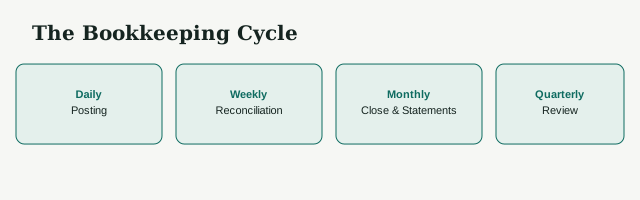
Daily posting, weekly reconciliations, and a monthly close checklist produce consistent results. Each month the provider delivers statements and a short summary highlighting key items.
Quarterly review and planning
Every quarter the provider reviews trends, recommends process improvements, and helps prepare for tax or audit deadlines.
Access and collaboration
Modern providers use secure portals and shared files so internal teams can access reports and workpapers anytime.
Choosing the right bookkeeping services for businesses
Select a provider that balances technical skill with practical communication. Ask about these items when evaluating partners.
Industry experience and systems knowledge
Choose a team familiar with your billing and payment platforms. Knowledge of common SaaS, retail, or service systems speeds setup and reduces integration issues.
Defined processes and review controls
Confirm the provider has a documented month end checklist and a review workflow to catch errors before reports go out.
Scalability and pricing
Check how the provider scales as transaction volume grows and how fees change as needs expand.
Data security and backups
Verify encrypted file transfer, role based access, and secure backups for financial records.
Clear reporting and support
Look for concise monthly notes, an accessible dashboard, and a designated point of contact.
LedgersCFO meets these expectations with a focus on clarity, fast onboarding, and documented processes.
How LedgersCFO handles bookkeeping for businesses
LedgersCFO offers bookkeeping services for businesses built around a simple promise. Deliver clean books on time and provide practical guidance that helps leadership act.
The approach includes
-
a short intake to map systems and priority reports
-
standardized posting and reconciliations each month
-
a monthly close pack with statements and workpapers
-
quarterly business reviews and tax readiness checks
-
secure file exchange and a single point of contact
This model keeps records consistent and reduces surprises at tax time or during audits.
Pricing models and engagement options
Bookkeeping services for businesses usually come as monthly subscriptions, often ranging from $500 to $2,500 per month depending on transaction volume and entity complexity. Catch-up or cleanup work is typically billed separately, often $150 to $300 per hour. Common models include fixed monthly fees that cover standard transaction volumes and add on fees for special tasks such as catch up work, audits, or complex reconciliations.
Pick a model that matches current needs and allows for growth without renegotiation every quarter.
Starting checklist for a smooth onboarding
Provide these items to speed setup and keep initial costs lower.
-
current accounting software access and admin credentials
-
last two closed months of trial balance and bank statements
-
a list of recurring payments and major customer billing flows
-
payroll provider access and recent payroll registers
-
copies of loan agreements and lease schedules
With these in hand the provider can deliver review ready books quickly.
Book a free consultation now
LedgersCFO helps businesses with bookkeeping services for businesses that deliver accurate records and timely reports. The team maps your needs, cleans records, and sets a repeatable monthly close process so leadership gets reliable financial insight.
FAQs
What do bookkeeping services for businesses cost
Costs depend on transaction volume, number of accounts, payroll complexity, and required reporting. Expect providers to give a clear monthly fee after a short intake.
How long does onboarding take
Small single entity businesses often onboard in one to two weeks. Multi entity or high transaction clients may need three to six weeks.
Will a bookkeeping provider handle payroll tax deposits
Many providers handle payroll posting and reporting, including quarterly Form 941 filings. For actual payroll tax deposits and filings confirm whether the provider offers payroll services or works with a payroll vendor.
Can bookkeeping services support audit readiness
Yes. Providers deliver reconciled workpapers and schedules that auditors use. Regular reconciliations and documented processes greatly reduce audit time.
Can the internal finance team access the books anytime
Yes. Providers use secure portals or shared accounting system access so internal teams can view reports and workpapers at any time.