Tax Residency Certificate for NRIs
Managing taxes across both India and the USA can be complex for NRIs, especially when it comes to avoiding double taxation. The Tax Residency Certificate plays a central role in simplifying this process. If you earn income in India while residing in the US, the Tax Residency Certificate helps you claim benefits under the Double Taxation Avoidance Agreement (DTAA). Without this certificate, Indian tax authorities may apply the highest withholding tax rate to your income, sometimes as high as 30% or more.What Is a Tax Residency Certificate?
A Tax Residency Certificate (TRC) is an official document issued by the IRS. It confirms that you are a tax resident of the United States for a specific year.
It is like a proof of residence for tax purposes. When you show this certificate to Indian tax authorities, they recognize that you already pay taxes in the USA. This allows you to claim lower tax rates or exemptions under the DTAA.
Without a Tax Residency Certificate, banks and institutions in India will withhold taxes at the maximum rate, often 30% or more. With the certificate, you can reduce this significantly based on DTAA provisions.
Why NRIs Need a Tax Residency Certificate?
The Tax Residency Certificate serves three critical purposes for NRIs:
Avoid Double Taxation: Pay taxes only once on income earned in either country. The DTAA ensures this, but you need the TRC to prove your eligibility.
Lower Withholding Rates: Indian banks deduct TDS (Tax Deducted at Source) on interest, dividends, and other income. With a Tax Residency Certificate, you can claim reduced rates, sometimes as low as 10-15% instead of 30%.
Claim Tax Credits: If you've already paid taxes in one country, the TRC helps you claim credits in the other. This prevents losing money to excessive taxation.
Many NRIs lose thousands of dollars annually simply because they don't have this certificate. Getting one should be part of your basic tax planning.
How to Get Your Tax Residency Certificate from the IRS?
The process is manual but simple. Here's what you need to do:
Step 1: Complete Form 8802 Download and fill out IRS Form 8802 (Application for United States Residency Certification). You'll need your Social Security Number or Tax ID, address, and details about the tax year you need certification for.
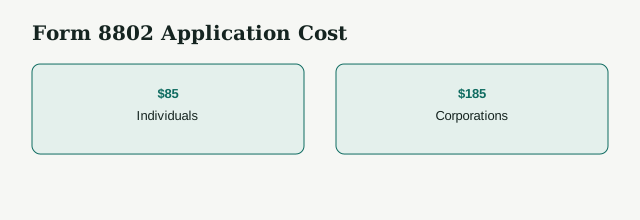
Step 2: Pay the Fee The application fee is $85 for individuals. For corporations, it's $185. Include payment with your application.
Step 3: Attach Your Tax Return Make a copy of your most recent US tax return. Write "Do Not Process" across the top. This shows the IRS you've filed taxes and are a genuine resident.
Step 4: Mail Your Application The IRS doesn't accept online applications for this. Mail or fax your completed Form 8802, payment, and supporting documents to the address listed on the form.
Step 5: Wait for Processing The IRS typically takes 4-6 weeks to process applications. Apply at least 45 days before you need the certificate.
Important Timelines to Remember
Apply Early: Submit your application at least 45 days before you need the Tax Residency Certificate. Last-minute applications often face delays.
Calendar Year Certification: Each certificate covers one calendar year (January to December).
Plan for Fiscal Year Overlap: India's fiscal year runs April to March. If your Indian income spans two calendar years, you'll need two separate certificates.
Advance Applications: You can apply for the next year's certificate after December 1st. This helps with advance tax planning.
Who Cannot Get a Tax Residency Certificate?
Not everyone qualifies. The IRS will reject applications from:
Non-Filers: If you haven't filed US tax returns, you can't get a TRC. The IRS needs proof you're paying US taxes.
Dual Residents: If you qualify as a tax resident in both countries and tiebreaker rules favor the other country, you're ineligible.
Certain Entities: Partnerships and fiscally transparent organizations without US partners cannot apply.
If you fall into any of these categories, consult a tax professional before applying.
Tips for a Smooth Application Process
Request Multiple Years at Once: If you need certificates for several years, request them together in one application. This saves time and money.
Use Express Delivery: Include a prepaid express envelope if you need faster delivery once processing is complete.
Authorize a Representative: File Form 2848 or 8821 to let a CPA or tax attorney handle IRS communication for you. This is helpful if you're unfamiliar with IRS procedures.
Keep Copies: Always keep copies of everything you submit. This helps if there are questions or if you need to track your application.
Common Mistakes to Avoid
Waiting Until Tax Season: Don't apply when you're filing taxes. You'll face delays and might miss deadlines for claiming DTAA benefits.
Incomplete Documentation: Missing documents cause rejections. Double-check that you've included your tax return marked "Do Not Process."
Wrong Tax Year: Make sure you're requesting the certificate for the correct year. Calendar year confusion is common.
Ignoring Fiscal Year Differences: Remember that India and the USA have different fiscal years. Plan accordingly.
How Professional Help Makes a Difference
While you can apply yourself, working with tax professionals who understand cross-border taxation saves time and prevents errors.
Tax advisors can prepare your Form 8802 correctly, ensure all documentation is complete, and follow up with the IRS if needed. They also help with broader NRI tax planning, including:
- Identifying all DTAA benefits you're eligible for
- Structuring your income to minimize tax liability
- Ensuring compliance in both countries
- Planning for future tax years
Professional guidance is especially valuable if you have complex income sources or investments in both countries.
Need Help Getting Your Tax Residency Certificate?
Book a Free Consultation Today
At LedgersCFO, we take care of everything from start to finish. We'll prepare your Form 8802, collect all necessary documents, and stay in touch with the IRS until you receive your certificate.
We work specifically with NRIs who need help with US tax matters and DTAA benefits. Our goal is simple: make sure your application goes through smoothly and on time. Whether this is your first time applying or you need certificates for several years, we know exactly what needs to be done.
You're already paying taxes in the US. Why pay extra in India when you don't have to? We'll help you get the certificate you need to lower your tax burden and keep more of what you earn.
FAQs
What is a Tax Residency Certificate and why do I need one?
A Tax Residency Certificate is proof from the IRS that you're a US tax resident. You need it to claim benefits under the India-US tax treaty and avoid paying taxes twice on the same income. Without it, you'll face maximum tax withholding rates in India.
How long does it take to get a Tax Residency Certificate?
The IRS typically processes applications in 4-6 weeks. However, you should apply at least 45 days before you need it to account for any delays or issues with your application.
Can I get a Tax Residency Certificate if I haven't filed US taxes?
No. The IRS requires proof that you've filed US tax returns to issue a Tax Residency Certificate. You must be current with your US tax obligations before applying.
How much does a Tax Residency Certificate cost?
The application fee is $85 for individuals and $185 for corporations. This is a one-time fee per application, even if you request certificates for multiple years.
Do I need a new Tax Residency Certificate every year?
Yes. Each certificate is valid for only one calendar year. If you need coverage for multiple years, you must request them separately or include multiple years in one application when you first apply.