Tax Season Checklist for Owners
Tax season comes every year. While some business owners struggle to gather the right documents, others stay organized and complete the process without stress. This blog explains what business owners need to prepare for when tax season arrives.What Tax Forms Does Your Business Need?
 Your business type determines which forms you file.
Solo Business Owners
You file Schedule C with your personal tax return. Schedule C shows your business income and expenses. If you made more than $400 profit, you also file Schedule SE for self-employment taxes.Partnerships
Partnerships file Form 1065. Each partner gets a K-1 form showing their share of profits or losses. Partners put this information on their personal returns.LLCs
- Single-member LLCs file like sole proprietors.
- Multi-member LLCs file like partnerships.
- You can choose different tax treatment by filing special forms.
S-Corporations
S-corps file Form 1120S. Shareholders get K-1 forms. The business doesn't pay federal income tax.C-Corporations
C-corps file Form 1120 and pay corporate taxes. If owners get dividends, they pay taxes on those too.Documents You Need to Collect
Income Records
Gather everything that shows money coming into your business, including sales receipts and invoices, bank deposit slips, credit card processing statements, and PayPal or other online payment records. Also collect any 1099 forms from clients who paid you $600 or more, interest statements from business bank accounts, insurance payments you received, and any other money your business earned.
Expense Records
Office and Equipment
Collect records for rent payments, utility bills, office supplies, computer and equipment purchases, software subscriptions, and business insurance payments.
Business Operations
Also gather records for supplies and inventory, professional services such as legal or accounting fees, marketing and advertising costs, travel expenses, and business meals with clients.
Employee Information
If you have employees, you need payroll records and tax deposits, copies of the W-2 forms you gave employees, any 1099 forms you gave contractors, and your quarterly payroll tax reports.
Banking Records
Collect statements from all business accounts, including checking account statements, savings account statements, credit card statements, and any business loan information.
Important Tax Deadlines
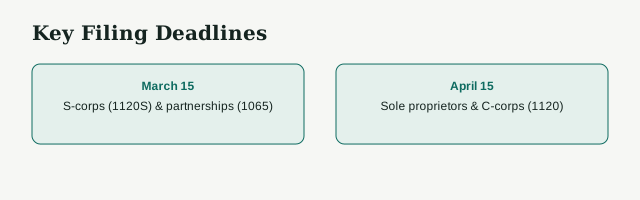
March 15
- S-corporations file Form 1120S
- Partnerships file Form 1065
- Multi-member LLCs follow partnership rules
April 15
- Solo businesses file Schedule C with personal returns
- Single-member LLCs follow solo business rules
- C-corporations file Form 1120
Extensions Available
- Partnerships and S-corps can extend to September 15
- Solo businesses can extend to October 15
- C-corporations can extend to October 15
Quarterly Estimated Taxes
If you expect to owe $1,000 or more, make payments four times per year:- April 15 (for January-March)
- June 15 (for April-May)
- September 15 (for June-August)
- January 15 (for September-December)
Quick Tips for Easy Tax Filing
Stay Organized All Year
- Keep business and personal expenses separate.
- Use a business bank account and credit card only for business purchases.
- Save receipts right away. Take photos with your phone or scan them. Store them in folders by month or category.
- Track business miles in a simple log. Write down the date, where you went, why, and how many miles.
Use Simple Systems
- Basic accounting software makes record-keeping easier. Programs like QuickBooks or Wave can connect to your bank account and sort transactions automatically.
- Keep a simple spreadsheet if you don't want accounting software. List income in one column and expenses in another.
Don't Miss Common Deductions
Many business owners forget about legitimate deductions, including home office space used only for business, half of business meal costs with clients, professional development and training, health insurance premiums if self-employed, business startup costs of up to $5,000 in year one, and professional memberships and subscriptions.Keep Good Records
- Save receipts, bank statements, and tax documents for at least three years. The IRS can audit returns up to three years after filing.
- Write notes on receipts explaining the business purpose, especially for meals and travel.
- Keep records of equipment purchases with dates and costs. You need this information for depreciation.
Get Help When You Need It
Consider hiring a tax professional if:- Your business made more than $100,000
- You have employees
- Your taxes are complicated
- You're not sure about deductions
- You got letters from the IRS
Get Expert Tax Support for Your Business
[Book Your Free Consultation Today]
At LedgersCFO, we make tax season simple for small business owners. We’ll connect you with the right CPA or tax accountant who can help organize your records, prepare accurate returns, and keep you compliant. Save time, reduce costly errors, and approach tax season with clarity and confidence.FAQs
What documents should small business owners gather for tax season?
You'll need income statements, expense records, payroll reports, bank statements, and last year's tax return.
How early should I start preparing for tax season?
It's best to start at least 2 to 3 months in advance so you have time to organize documents and spot missing information.
Do I need a CPA or can a tax accountant handle my filing?
A CPA is better for complex tax strategies and audits. A tax accountant is a good choice for straightforward tax filing.
What's the biggest mistake small businesses make during tax season?
Many business owners wait until the last minute, which increases errors and missed deductions.
How does LedgersCFO connect me with the right tax professional?
At LedgersCFO, we review your business stage, tax needs, and budget. Then we match you with a CPA or tax accountant who fits your exact requirements.