FLA, APR, and ODI Compliance Calendar
Suppose you're an Indian founder managing a business overseas. In that case, the Reserve Bank of India (RBI) requires strict reporting of any foreign investment activity, whether you're investing abroad or receiving funds from overseas. Forms like ODI, APR, and FLA serve different purposes, but they share one commonality: timing matters. Missing a deadline can delay future transactions or attract regulatory penalties. That’s why having a clear, founder-friendly compliance calendar is essential.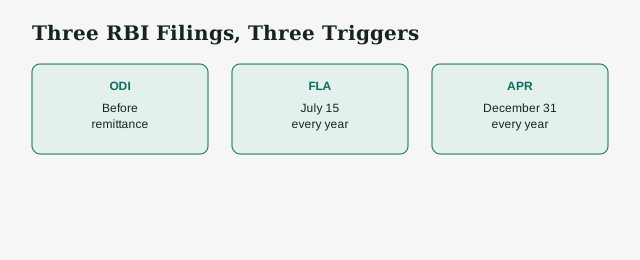
Understanding the Big Three: ODI, APR, and FLA
The three core filings that most Indian companies with global operations need to stay on top of.1. ODI – Overseas Direct Investment
What it covers
ODI refers to any form of investment, including equity participation, loans, or corporate guarantees, that an Indian company makes in a foreign entity. This includes actions such as setting up a subsidiary in the United States or acquiring a stake in a business based in Europe.When to file
Before making any outbound remittance, the company must file Form FC. These must go through your RBI-authorised bank, also called an Authorised Dealer (AD) Bank, via the FIRMS Portal.Why it matters
You cannot legally remit money abroad without completing this step, and the automatic route generally caps your commitment at 400% of net worth or $1 billion, whichever is lower. The RBI will only issue a Unique Identification Number (UIN) after the documentation is in order. This UIN becomes your reference for all future filings related to that investment.Typical documents required
- Board resolution approving the investment
- Certificate of incorporation and other documents of the foreign entity
- Shareholding structure
- PAN, CIN, and audited financials of the Indian company
- Valuation report if the investment is in an existing foreign business
2. APR – Annual Performance Report
What it covers
Once the foreign investment has been made, you must report on its performance annually. This is done via the Annual Performance Report (APR).Who needs to file
Every Indian company with an active ODI, regardless of whether the foreign business is currently operating, profitable, or dormant.Key items included in the APR
- Updated shareholding pattern
- Operational status (active/dormant/closed)
- Financials of the foreign entity
- Details on profits, dividends, or repatriation (if any)
Deadline
December 31 of the following financial year. For example, if you invested in a given financial year, the APR for that investment is due by December 31 of the following year.Why it matters
Failure to file the APR can restrict future remittances and may trigger regulatory action from the RBI. Some AD Banks also require early internal submissions to confirm your bank’s internal cut-off dates.3. FLA – Foreign Liabilities and Assets Return
What it covers
The FLA Return provides RBI with an overview of your company’s foreign liabilities (like FDI received) and foreign assets (like ODI made). It helps track the country’s overall foreign investment position.Who must file it
Any Indian company or LLP that has either:- Received Foreign Direct Investment (FDI), or
- Made an Overseas Direct Investment (ODI) during the financial year.
Deadline
July 15 every year, based on the status as of March 31 of the same year.Where to file
FLA is submitted through the FLAIR Portal, a separate RBI portal distinct from FIRMS. No physical filing is accepted.What’s needed
- Shareholding details
- Foreign investment amounts
- Balance sheet data as of March 31
Why it matters
Missing this filing may not seem urgent, but it can delay inbound or outbound funding approvals. Some companies also face issues during tax or regulatory audits for failing to file.RBI Compliance Calendar for Founders
| Form | Deadline | Applicable To |
|---|---|---|
| Form FC (Part A) | Before remittance | Indian companies receiving new foreign investment |
| Form FC (Part B) | Within 30 days of changes | When there's a change in shareholding or other prescribed events |
| FLA Return | July 15 each year | Companies with FDI or ODI as of March 31 that year |
| APR | December 31 each year | Indian companies with existing ODI in foreign subsidiaries or JVs |
What If You Miss a Deadline?
Missing a deadline with any of these filings can result in monetary penalties under FEMA — up to three times the amount involved under Section 13- Delayed approvals for new investments
- Restrictions on future remittances
- Increased scrutiny during audits or funding rounds
Best Practices for Staying Compliant
Founders juggling business growth and operations can still manage RBI filings smoothly with these habits:1. Maintain a Digital Compliance Calendar
Use tools like Notion, Google Calendar, or Excel to map out deadlines. Set reminders 2–3 weeks in advance.2. Centralized Documentation
Create a secure folder for all compliance paperwork, including:- UIN letters
- Board resolutions
- APR reports
- FLA returns
3. Work with Experts
Even small mistakes like incorrect valuation or incomplete filings, or missing the 10% ownership threshold that first triggers ODI reporting, can delay your overseas remittance or cause rejection. A compliance partner familiar with RBI’s foreign investment rules ensures accuracy, speed, and peace of mind.Need Help with ODI, APR, or FLA Compliance? [Schedule a free consultation today]
At LedgersCFO, we specialize in helping Indian founders manage the complexities of cross-border finance. Whether you're setting up a U.S. subsidiary, preparing your Annual Performance Report, or filing your FLA return, our team ensures every step is handled accurately and on time. We work directly with your Authorised Dealer Bank, prepare all required documentation, and stay updated with RBI’s latest compliance rules so you don’t have to. With LedgersCFO, you can stay fully compliant with RBI rules while focusing on building and growing your business abroad.FAQs
What is the deadline for filing the FLA return with the RBI?
The FLA return must be filed by July 15 every year, based on the company’s financial position as of March 31. It applies to Indian companies that received FDI or made ODI during the financial year.
Is the APR required even if the foreign subsidiary is dormant?
Yes. The Annual Performance Report (APR) is mandatory for all Indian companies with active ODI, even if the foreign entity has no operations or revenue. It ensures the RBI has updated records on all overseas investments.
Can I send funds abroad before filing the ODI Form A?
No. You must submit ODI Form A through your AD Bank and obtain a UIN from the RBI before transferring funds abroad. Sending money without this approval can lead to non-compliance under FEMA.
What happens if I miss the RBI compliance deadlines?
Missing deadlines for FLA, APR, or ODI filings may lead to monetary penalties, remittance delays, and increased scrutiny from regulators. In some cases, the RBI may require a compounding application to regularize the delay.
How does LedgersCFO help with ODI, APR, and FLA compliance?
LedgersCFO works closely with Indian founders to manage the full lifecycle of foreign investment compliance. From filing ODI Form A, coordinating with your Authorised Dealer Bank, preparing APR and FLA reports, to resolving late filings through RBI-approved channels, our team ensures everything is accurate, timely, and aligned with RBI rules so you can stay focused on business growth.