VC Due Diligence Checklist
 As a firm specializing in VC-backed startups, we've helped over a thousand companies secure seed and venture funding. We routinely review dozens of VC due diligence checklists and share what goes into a standard one. Seed rounds commonly raise $500,000 to $2 million, Series A rounds $2 million to $15 million, and Series B rounds $15 million to $40 million, with review depth scaling alongside check size.
This article outlines what to expect from a due diligence checklist by funding stage. Scroll through to explore diligence for pre-seed/seed, Series A, and Series B investments based on the most recent fundraising rounds we've supported.
As a firm specializing in VC-backed startups, we've helped over a thousand companies secure seed and venture funding. We routinely review dozens of VC due diligence checklists and share what goes into a standard one. Seed rounds commonly raise $500,000 to $2 million, Series A rounds $2 million to $15 million, and Series B rounds $15 million to $40 million, with review depth scaling alongside check size.
This article outlines what to expect from a due diligence checklist by funding stage. Scroll through to explore diligence for pre-seed/seed, Series A, and Series B investments based on the most recent fundraising rounds we've supported.
Due Diligence By Funding Stage
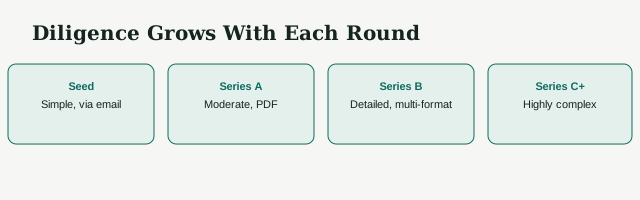
In Silicon Valley, the level of scrutiny during diligence grows with each funding round. Early-stage companies lack a long track record, whereas Series B startups and beyond present complex customer, product, and financial data that require a deeper review.Pre-Seed/Seed Stage Due Diligence
- Focus: Founding team, idea feasibility, and target market potential.
- Management Team: Founders’ backgrounds, skills, and commitment.
- Market Validation: Market size and demand indicators.
- Go-To-Market Strategy: Early-stage growth and outreach plans.
- Product: MVP or prototype, user feedback.
- Legal: Incorporation, IP protection (if applicable).
- Finances: Budgeting, fund usage, and cash burn.
- Accounting & Tax Compliance: Business banking, separation of personal expenses, initial financial record-keeping.
- Checklist Complexity: Usually simple; shared as text via email.
Series A Due Diligence
- Focus: Market fit, revenue traction, and scaling potential.
- Management Team: Core hires, leadership development.
- Market Validation: Customer engagement and consistent revenue.
- Go-To-Market Strategy: Demonstrated GTM channels with viable CAC.
- Product: Technical roadmap, product scalability.
- Legal: Existing agreements, IP ownership, compliance status.
- Finances: GAAP financials, unit economics, and forecasting.
- Accounting & Tax Compliance: Formal accounting systems, filing records.
- Checklist Complexity: Moderate; often delivered as a PDF document.
Series B Due Diligence
- Focus: Growth strategy, systems optimization, and profitability.
- Management Team: C-level roles and experienced team members.
- Market Validation: Expansion metrics, retention, and share of market.
- Go-To-Market Strategy: Scalable marketing and sales with proven returns.
- Product: Scalable infrastructure and robust platform.
- Legal: Broader legal checks, team contracts, pending issues.
- Finances: Revenue streams, cost structure, investment use.
- Accounting & Tax Compliance: Mature accounting, potential audit readiness, and jurisdiction-specific tax planning.
- Checklist Complexity: Detailed reviews and multiple document formats (PDFs, spreadsheets).
Series C and Beyond Due Diligence
- Focus: Leadership in the market, new verticals, governance.
- Management Team: Public or M&A-ready leadership with scaling experience.
- Market Validation: Industry standing and market health.
- Go-To-Market Strategy: High-performance systems and strong ROI.
- Product: Patents, competitive tech edge.
- Legal: Global regulatory standards, M&A/IPO compliance.
- Finances: EBITDA, public-readiness, and long-term planning.
- Accounting & Tax Compliance: Audit-ready financials, global tax protocols.
- Checklist Complexity: Highly complex, handled by external accounting firms with detailed reports.
Downloadable Due Diligence Checklists
VCs don’t want to miss anything when considering a startup for funding. This downloadable checklist includes typical diligence requests based on the funding stage. The SBA's guide to funding your business outlines the broader financing paths available too. Use it to prepare your materials before engaging with investors. Note: Each deal is unique, so investors may request items not listed here. Always coordinate with your legal and accounting teams.Included in the Checklist:
- Pre-Seed Stage Financial Summary
- Seed Stage Due Diligence Items
- Series A Due Diligence Items
- Series B Due Diligence Items
- Series C Due Diligence Items
Need expert help preparing for financial due diligence?
Schedule a free consultation with LedgersCFO today. Our startup finance experts will help you get investor-ready with clean books, reliable systems, and practical support tailored to your growth stage. Book a free consultation today.FAQs
What is a VC due diligence checklist?
It’s a structured list of documents and data that venture capitalists review before investing in a startup.
How should I prepare for VC due diligence?
Start by organizing your financial statements, legal documents, and key metrics into a secure data room.
Do all investors ask for the same checklist?
Not exactly. While there is overlap, each VC may have unique requests depending on their investment strategy and the startup’s stage.
What happens if my startup doesn’t pass due diligence?
You may lose the opportunity or face delays. Proper preparation and transparency can help avoid issues.
How does LedgersCFO help with VC due diligence?
LedgersCFO helps by reviewing your financials, organizing key documents, and coordinating with your legal and tax advisors to ensure your startup is diligence-ready.