APR and FLA Filing for Indian Companies
The APR filing process is a mandatory compliance requirement for Indian companies with overseas subsidiaries, including those in the United States. Establishing a foreign entity is a strategic move, but it does not exempt businesses from ongoing regulatory obligations under the Reserve Bank of India (RBI). Both the Foreign Liabilities and Assets (FLA) Return and the Annual Performance Report (APR) must be filed annually. Why Do Indian Companies with U.S. Subsidiaries Have to File FLA and APR? When Indian companies engage in global business, the RBI monitors two primary categories:- Foreign liabilities, such as receiving Foreign Direct Investment (FDI)
- Foreign assets – such as investing in a U.S. subsidiary (ODI)
What Is the FLA Return?
The FLA Return is an annual report that captures Indian companies' foreign liabilities and assets. It must be submitted electronically through the RBI’s FLAIR portal.Who Needs to File the FLA?
You must file the FLA return if your Indian entity:- Has received FDI
- Has made an Overseas Direct Investment (ODI)
- Held any foreign assets or liabilities as of March 31 of the financial year
What Is Required for FLA Filing?
- Shareholding structure (domestic and foreign)
- Financials of both the Indian and foreign entity
- Details of inbound/outbound foreign investments
What Is the APR?
The Annual Performance Report (APR) is a yearly compliance filing that updates the RBI on the operational and financial performance of the foreign entity in which the Indian company has invested.Who Must File the APR?
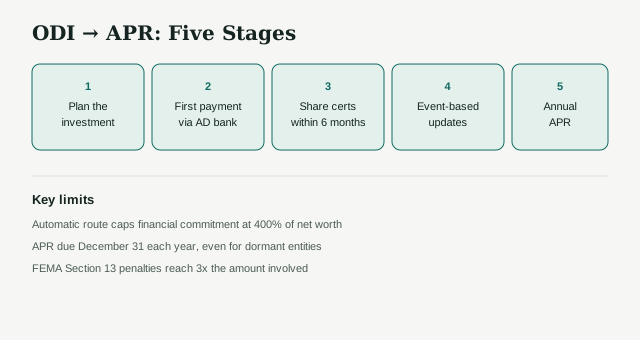
Any Indian company that has made an ODI, such as investing in a U.S. subsidiary, must submit the APR every year for each foreign entity, even if the subsidiary:- Had no revenue or business activity
- Is dormant or loss-making
- Is newly incorporated
What Does the APR Include?
- Audited Financials of the foreign company
- Shareholding pattern updates
- Operational status (Active/Dormant/Closed)
- Repatriation, dividends, or restructuring (if applicable)
NIL Reporting for Inactive Subsidiaries
Even if your U.S. subsidiary is dormant or inactive, both FLA and APR filings are still required. In such cases:- FLA Return: A NIL filing can be submitted directly via the FLAIR portal.
- APR: A NIL APR must still be routed through your AD Bank, even if there are no business activities to report.
Documents to Collect for a Smooth FLA/APR Filing Process
1. Foreign Subsidiary’s Financial Statements
Maintain audited or provisional financials, including the balance sheet, P&L, and cash flow of the foreign entity.2. Proof of Overseas Investment Transactions
Keep clear records of all fund transfers made to the foreign subsidiary, whether equity, loan, or guarantee. Bank SWIFT messages, remittance advice, and Form A2 copies are essential here.3. Shareholding and Ownership Structure
Document the ownership pattern of both the Indian company and the foreign subsidiary. Record any changes in shareholding or voting rights during the year for accurate reporting.4. Business Performance Summary
Prepare a summary of the foreign entity’s business activity, whether active, dormant, or loss-making. Include basic figures like revenue, expenses, and net profit/loss for the APR filing.5. ODI Filing and RBI Acknowledgements
Save copies of the Form ODI, Unique Identification Number (UIN) allotment, and any correspondence with the RBI or AD Bank. This ensures that your filings remain consistent year after year.Why the APR Filing Process Still Applies If You Have a U.S. Subsidiary
1. ODI Triggers Compliance
Once funds are sent from India as equity, a loan, or a guarantee, it qualifies as ODI. This activates RBI compliance rules, including FLA and APR filing, under the framework the RBI issued under Section 46 of FEMA, 1999.2. U.S. Subsidiary Is a Foreign Asset
Even if it operates independently, your U.S. subsidiary remains a foreign asset on your Indian company’s balance sheet. So, FLA filing is mandatory every year.3. Majority Ownership Requires Reporting
If your Indian company owns over 51%, well past the 10% ownership threshold that first triggers ODI reporting, or holds significant control, you must file both FLA and APR as per RBI guidelines.How to Stay Compliant with FLA and APR Filing Process
Regardless of your foreign entity’s status, active, dormant, or newly incorporated, these filings remain mandatory1. Maintain Accurate Investment Records
Keep organized records of every overseas investment and remittance, including:- Board resolutions
- Fund transfer proofs
- Shareholding structures
- Incorporation and regulatory documents
2. Coordinate with Your Authorised Dealer (AD) Bank
APR filings go through your AD Bank, the same bank that handles your foreign transactions. Stay informed about internal deadlines, as they may be earlier than RBI's.3. File FLA Return by July 15
The FLA Return must be submitted online by July 15 each year. Ensure the data reflects the company’s financial position as of March 31 of that year.4. Work With a Compliance Expert
RBI guidelines evolve regularly. A chartered accountant or compliance advisor with expertise in ODI, FLA, and APR filing process ensures:- Timely and accurate filings
- Compliance with format and documentation rules
- Communication with AD Bank and RBI (when required)
Need help with your FLA or APR filing process? [Schedule a free consultation today]
At LedgersCFO, we’ve supported dozens of Indian founders with U.S. subsidiaries in staying fully compliant with RBI regulations. Whether you're filing a NIL APR or struggling with your FLA submission, we simplify the process so you can focus on growing your global business. We handle the end-to-end coordination, gathering foreign subsidiary data, matching it with ODI records, preparing submissions, and working directly with your AD Bank. With our team behind you, you’ll never miss a deadline or face avoidable remittance delays. Let us take the compliance burden off your plate. Disclaimer: RBI regulations, circulars, and ODI guidelines are subject to change. Always refer to the latest RBI Master Directions on ODI or consult your AD Bank or compliance advisor for updated requirements.FAQs
Do I need to file FLA and APR if my U.S. subsidiary is inactive?
Yes, both FLA and APR must be filed even if the U.S. subsidiary is inactive. A NIL report is required to confirm that no financial activity occurred.
What is the deadline to file the FLA Return?
The FLA is due annually by July 15 via the RBI’s FLAIR portal.
Can I submit the APR myself?
No. APR submissions must be routed through your AD Bank; your CA and bank will handle the filings.
What are the consequences of missing APR or FLA deadlines?
Non-compliance can result in blocked remittances, RBI notices, and reputational harm with investors or financial institutions — FEMA Section 13 penalties can reach three times the amount involved.
How does LedgersCFO help with FLA and APR filings?
We handle the entire process end-to-end, from gathering financials of your U.S. entity to ensuring the filings match your original Form ODI. We work closely with your AD Bank and coordinate submissions so that you avoid delays and errors.