Registered Tax Preparer: How to Pick
A registered tax return preparer helps businesses prepare accurate tax filings that follow IRS rules. As a company grows, the reporting becomes more detailed. Multi-state income, new expenses, vendor payments, and asset purchases all need to be recorded correctly. A skilled preparer ensures that your filings match your books and that every form is submitted on time.At LedgersCFO, we work with business owners who want structured, transparent, and reliable preparation support throughout the year. This includes complete review, organized documentation, and clear explanations that help founders stay confident during every filing cycle.
Selecting a Registered Tax Return Preparer for Corporate Tax Needs
When selecting a registered tax return preparer, companies must ensure that the professional understands business filings, not just individual returns. Corporate reporting involves multi-step reviews, reconciliation of books, and documentation that aligns with tax regulations.
Industry Experience
A registered tax return preparer is a professional who is paid to prepare, or assist in preparing, federal tax returns for compensation. A preparer who has worked with businesses similar to yours will understand your records and tax structure better. This experience shows in the accuracy of their work and the questions they ask during review.
Clear Process and Documentation
A reliable preparer follows a consistent workflow: reviewing the books, confirming classifications, preparing drafts, and performing checks before final filing. Businesses benefit from someone who keeps documents organized and provides clear explanations instead of leaving them guessing.
Understanding of IRS and State Rules
Business filings differ across states. Income, payroll, and sales tax requirements vary, and not every preparer is familiar with these differences. Someone who understands multi-state rules prevents errors that lead to penalties, including the accuracy-related penalty of 20% of the underpayment under Section 6662 for substantial understatements.
Business Tax Filing Services That Support Accurate Reporting
Even well-managed companies have inconsistencies in financial statements. A preparer helps catch and correct them before filing. Instead of only entering numbers on forms, they review the entire financial story—revenue, expenses, payroll, depreciation, and more.
Why Accurate Reporting Matters
When filings reflect real business activity, audit risks decrease. Banks, investors, and lenders also rely on these documents. Accuracy builds trust not only with the IRS but also with stakeholders.
How Businesses Benefit
-
Clean reconciliation of accounts
-
Correct classification of expenses
-
Identification of eligible deductions
-
Clear schedules for assets and depreciation
This ensures the tax return supports the business’s financial position rather than creating complications.
Corporate Tax Preparation Support for Growing Companies
Growth brings new reporting responsibilities. Hiring employees in new states, opening branches, or expanding services creates different filing requirements. A registered tax return preparer helps companies stay ahead of these changes.
Managing Multi-State Requirements
When a business operates in more than one state, it may need to file returns in each jurisdiction. A preparer ensures that you file correctly and avoid missing obligations.
Handling Complex Corporate Returns
Corporate tax preparation requires careful review of balance sheets, profit-and-loss reports, and year-end adjustments. A preparer checks these documents and ensures that all figures match across forms.
Registered Tax Return Preparer and Cross-Border Filings
Businesses with ties to India or other countries face extra reporting needs. Foreign-owned LLCs, related-party transactions, and cross-border payments must be documented clearly. A registered tax return preparer with international experience helps avoid errors that could trigger notices or penalties.
Key Areas Where International Knowledge Helps
-
Filing forms required for foreign ownership
-
Reporting financial flows between entities
-
Documenting transfer-related transactions
-
Ensuring proper classification of overseas expenses
For companies operating in both India and the U.S., this guidance is essential.
Evaluating Expertise Before Hiring a Preparer
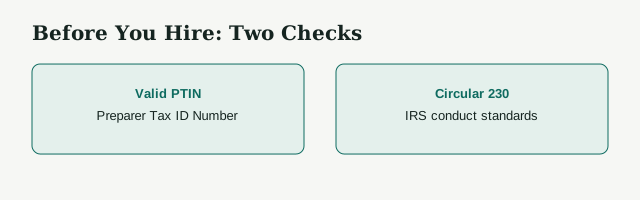
It is easy to assume that every preparer offers the same service, but businesses should evaluate expertise carefully. At minimum, confirm the preparer holds a valid Preparer Tax Identification Number (PTIN) and follows the standards set out in the IRS's Circular 230.
Review Their Business Knowledge
Ask whether they understand payroll filings, vendor payments, contractor forms, depreciation schedules, and asset purchases. This knowledge is critical for preparing business returns.
Ask About Their Tools and Workflow
Preparation software, documentation systems, and review checklists all play a role in producing accurate returns. A strong workflow shows that the preparer values consistency.
Check Availability During Filing Seasons
Filings are time-sensitive. A preparer who cannot meet deadlines, respond quickly, or provide updates can disrupt your entire accounting cycle. Under Section 6694 of the tax code, a preparer's own penalties for unreasonable positions start at $1,000 (or 50% of fees earned), rising to $5,000 (or 75%) for willful or reckless conduct, so their diligence directly affects your risk.
Registered Tax Return Preparer Support Throughout the Year
Although the filing season peaks once a year, the work required for accurate returns happens steadily. Year-round support helps businesses stay organized.
Benefits of Ongoing Support
-
Cleaner monthly records
-
Early identification of deductible expenses
-
Fewer last-minute adjustments
-
Organized documentation for audits or reviews
This makes the annual filing process easier and more predictable.
How LedgersCFO Supports Business Tax Filings
At LedgersCFO, we help business owners prepare accurate, compliant returns throughout the year. Our team reviews financials, reconciles books, prepares schedules, and ensures every form is filed correctly. We also explain filing choices clearly so owners understand their obligations and opportunities.
Businesses rely on us for:
-
Corporate returns
-
Multi-state filings
-
Foreign-owned entity support
-
Payroll and contractor reporting
-
Documentation and audit readiness
Our goal is to create a reliable tax filing system that supports long-term growth.
Book a Free Consultation Now
If you want your business taxes handled with clarity and accuracy, book a free consultation now. We will review your current filing process, highlight any gaps, and explain how a structured approach can help you stay compliant and avoid mistakes.
FAQs
What does a registered preparer do for businesses?
They review financials, prepare returns, and ensure filings match IRS and state requirements. A qualified preparer also holds a valid PTIN and follows Circular 230 standards, giving you assurance that the work meets professional and ethical requirements.
How does choosing the right preparer help a company?
The right professional ensures accurate reporting, reduces error risk, and keeps you compliant. They catch classification mistakes early, document their work clearly, and help you avoid penalties that come from rushed or careless filings.
Can a preparer handle multi-state filings?
Yes, experienced preparers understand state-specific rules and filing obligations. They track differing income, payroll, and sales tax requirements across jurisdictions so you do not miss a filing in any state where you operate.
Do preparers help with foreign-owned entity filings?
They assist with required disclosures and forms related to international ownership, including related-party transaction reporting and cross-border payment documentation that international tax rules require.
What should a company provide before filing?
Financial statements, payroll data, expenses, reconciliations, and prior-year returns. Having these ready in advance speeds up the review process and reduces the chance of last-minute questions or delays.