What is IRS Form 941, and How to File It
If you run a business with employees, you’ll need to deal with Form 941. This IRS form helps you report payroll taxes, and filing it correctly is important to avoid penalties. This blog explains what Form 941 is, why it matters, and how to file it the right way.What is IRS Form 941?
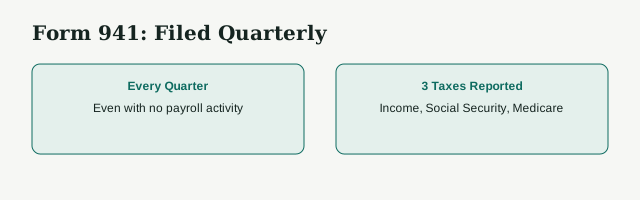
IRS Form 941, also called the Employer’s Quarterly Federal Tax Return, is the form most businesses use to report payroll taxes to the IRS. It reports the income tax you withhold from employees, plus Social Security and Medicare taxes, including your share as the employer. If you have employees, this form becomes a regular part of your tax routine. You need to file it every quarter, even if your business had no payroll activity during that time (unless the IRS has granted you an exception).Who is Required to File Form 941?
Generally, any business with employees is required to file Form 941. This includes corporations, partnerships, and sole proprietors that pay wages subject to federal income tax withholding or Social Security and Medicare taxes. Some exceptions exist. For example:- Seasonal businesses may file only for quarters when they operate.
- Certain agricultural employers file Form 943 instead.
- Businesses that hire household employees usually follow different reporting requirements.
Sections You’ll Find in Form 941
 Form 941 is divided into several parts. Here’s what each covers:
Part 1: Wages and Taxes Withheld
This section asks for the total wages you paid, the taxes withheld from employees, and your portion of Social Security and Medicare taxes.Part 2: Tax Adjustments
Here you can adjust for sick pay, tips, group-term life insurance, or other items that affect tax amounts.Part 3: Tax Liability for the Quarter
This part shows your total tax liability for the quarter and determines whether you owe additional taxes or are due a refund.Part 4: Third-Party Designee
If you want to authorize someone else, such as a payroll provider, to speak with the IRS on your behalf about this form, you’ll indicate that here.Part 5: Signature
This is where you sign and date the form, confirming that the information provided is correct.Taxes Reported on Form 941
The form reports three main types of payroll taxes:- Federal income tax withheld from employee wages.
- Social Security tax (both the employee and employer portions).
- Medicare tax (both the employee and employer portions, plus any Additional Medicare Tax withheld for high earners).
Details About the Line Items on Form 941
Form 941 contains multiple numbered lines, each requiring specific information. In simple terms:- Lines 1–5: Record employee counts, total wages paid, and tax amounts.
- Lines 6–10: Adjust for any special wage categories such as tips or sick pay.
- Lines 11–15: Show total taxes after adjustments and any deposits already made.
- Lines 16–18: Outline your tax liability by month (important if you are a monthly depositor).
- Lines 19–25: Handle balances due, overpayments, and your filing signature.
Step-by-Step: How to Complete Form 941
1. Gather Payroll Records
Have employee wage details, tax withholdings, and employer contribution amounts ready.2. Fill in Employer Information
Enter your business name, address, and employer identification number (EIN).3. Enter Wages and Taxes
Report total wages, tips, and other compensation paid to employees during the quarter.4. Calculate Social Security and Medicare Taxes
Fill in both the employee and employer portions of these taxes.5. Apply Adjustments if Needed
Record any corrections for sick pay, tips, or life insurance coverage.6. Determine Total Liability
Subtract deposits already made from the total taxes due to see if you owe more or qualify for a refund.7. Sign and Date
Complete the form with your signature before submission.Where to File Form 941
You can file Form 941 either electronically or by mail. The address depends on your business location and whether you’re sending payment with the form.- E-filing: The IRS e-file system or approved software providers can submit the form quickly.
- Mailing: Use the IRS mailing address listed in the instructions for your state.
Mistakes to Avoid When Filing Form 941
- Reporting the wrong employee count or wage totals.
- Forgetting to include the employer share of Social Security and Medicare.
- Using outdated tax rates.
- Filing late can result in penalties and interest.
- Not signing the form makes it invalid.
Need Help With Form 941?
Form 941 is essential for staying compliant with payroll tax rules, but errors can be costly. LedgersCFO can help you prepare accurate filings, manage payroll records, and ensure all deadlines are met. Book a free consultation today and keep your payroll tax process stress-free.FAQs
How often do I file Form 941?
It must be filed every quarter unless the IRS gives you an exception, and you still file even in quarters with no payroll activity, unless you qualify as a seasonal employer.
Can I file Form 941 online?
Yes, the IRS e-file system allows electronic submission, which is faster than mailing and reduces the chance of processing delays or lost paperwork.
What if I made a mistake after filing?
You’ll need to file Form 941-X to correct any errors, and you generally have three years from the original filing date to do so.
Do seasonal businesses need to file every quarter?
Only for the quarters when they pay employees. Mark the seasonal employer box on the form so the IRS does not expect a return for the quarters you skip.
Is there a penalty for filing Form 941 late?
Yes, late filing can result in penalties and interest on unpaid taxes.