Form 1120: A C Corporation Filing Guide
This blog simplifies how to file the 1120 tax form for U.S. C corporations, explaining eligibility, deadlines, penalties, and common mistakes, plus how LedgersCFO makes the process stress-free from start to finish.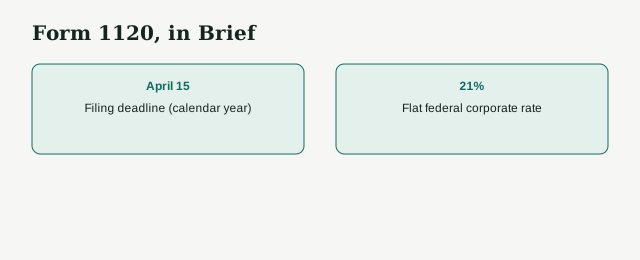
What Is the 1120 Tax Form and Why Does It Matter?
The 1120 tax form is a federal tax return filed by U.S.-based C corporations to report their income, deductions, and overall tax liability. It ensures that the corporation is compliant with federal tax rules and provides a transparent record of its financial standing. For small businesses structured as C corporations, this isn’t just a tax return. It's a critical piece of documentation.Who Must File the 1120 Tax Form?
You’re required to file the 1120 tax form if:- Your business is a registered C corporation, even if it made no income this year.
- You’ve chosen to be taxed as a C corp, even if you’re legally structured as an LLC.
- You’re a foreign-owned U.S. business or a corporation earning U.S. income.
- You want to report your company’s income, expenses, and tax liabilities accurately to the IRS.
What Happens If You Don’t File the 1120 Tax Form?
- IRS penalties: The minimum fine is either the tax due or $510 if the return is over 60 days late. Interest accrues: Late payments build up interest until the amount is settled.
- Missed deductions: Certain tax breaks, like bonus depreciation or R&D credits, are only allowed if your 1120 is filed on time.
- Reputation risk: Delinquent filings can damage your credibility with banks and investors.
1120 Tax Form Deadline
Your 1120 tax form is due on the 15th day of the fourth month after your tax year ends.- For calendar-year filers: The due date is April 15.
- Extension available: File Form 7004 for an extension until October 15.
Common Filing Mistakes to Avoid
- Using the wrong form: Only use Form 1120 for C corps. If you're a foreign-owned LLC or an S corp, the correct forms may include 1120-F, 1120-S, or a pro forma 1120 with Form 5472.
- Missing income entries: The IRS expects all sources of income, including passive or small side earnings.
- Mixing personal and business expenses: Only claim expenses that are clearly business-related.
- Forgetting estimated tax payments: Always report any quarterly payments made throughout the year.
How We Handle Form 1120 at LedgersCFO
At LedgersCFO, we believe you didn’t start your business to deal with this type of form, you started it to build something meaningful. That’s where we come in. We take care of Form 1120 from start to finish, so you don’t have to stress about paperwork or deadlines. Our job is to handle the tax side, so you can stay focused on growing your business.Here is how we will fill out your Form 1120:
-
We review your business structure
-
We look at your transactions.
-
We file it the right way.
-
We will keep you ready for next year.
Final Thought: This Isn’t Just Paperwork
The 1120 tax form isn’t optional. It’s the legal backbone of your business’s financial reporting. Avoiding it can cost your company money, opportunities, and credibility. But the good news? You don’t have to do it alone. Let LedgersCFO be your tax wingman while you focus on building something meaningful. LedgersCFO – You create. We’ll manage the numbers. [Book a Free Consultation Now]FAQs
Who must file Form 1120?
Every U.S. C corporation must file Form 1120, even if it had no income for the year. LLCs that elect to be taxed as a C corporation also file it.
When is Form 1120 due?
For calendar-year filers, Form 1120 is due on April 15, the 15th day of the fourth month after the tax year ends.
Can I get an extension to file Form 1120?
Yes. Filing Form 7004 gives you until October 15 to file, but it only extends the filing deadline, not the deadline to pay any tax owed.
What happens if I file Form 1120 late?
The IRS charges a penalty based on the unpaid tax, with a flat minimum fine (currently $510) if the return is more than 60 days late, plus interest until the balance is paid.
How does LedgersCFO help with Form 1120?
LedgersCFO reviews your business structure, checks which forms actually apply, including the pro forma 1120 plus Form 5472 for foreign-owned LLCs, prepares and files the return, and helps you stay compliant going forward.